Clunks, knocks, or rattles
Tell us whether the sound occurs over bumps, while turning, during braking, or at another specific time.

Suspension and steering service · Hawthorne
Clunks, excessive bouncing, uneven tire wear, and handling changes can have more than one cause. Tell us when the symptom appears and whether it began after a pothole, curb contact, collision, or recent work. We inspect the relevant condition before recommending repair.
Shop: Mon–Fri · 8:00 AM–6:00 PM · 3940 W El Segundo Blvd, Hawthorne
When to contact us
Suspension, steering, wheel, tire, and alignment concerns can produce overlapping symptoms. A clear symptom history and an in-person inspection help identify the appropriate repair path before parts or added work are authorized.
Tell us whether the sound occurs over bumps, while turning, during braking, or at another specific time.
Describe how the vehicle responds after a bump or during braking. The symptom alone does not confirm which component needs attention.
Note the speed, road condition, and steering input when the vehicle begins to feel unstable or less predictable.
A corner that appears lower than the others or a visible change in wheel position should be inspected before continued driving is assumed safe.
Tire wear can involve alignment, tire condition, or worn steering and suspension parts. Mechanical condition should be checked before alignment is treated as the complete solution.
Share any pothole, curb contact, collision, tire service, alignment, or suspension work that happened before the symptom began.
Safety before service
Wheel alignment adjusts wheel angles; it does not repair a worn or damaged part. If the steering feels loose, a wheel sits at an unusual angle, a tire rubs, or the vehicle feels unstable, stop driving and call for help. Final scope, timing, and parts needs depend on inspection, vehicle condition, availability, and authorization.
How the request moves
Send the vehicle year, make, model, mileage, when the symptom occurs, and any recent impact or repair.
The inspection path is based on the symptom and may include the related suspension, steering, wheel, and tire areas.
We explain what is known and the proposed work before added repair is authorized. If wheel alignment is appropriate afterward, it is presented as a separate next step.
Start the request
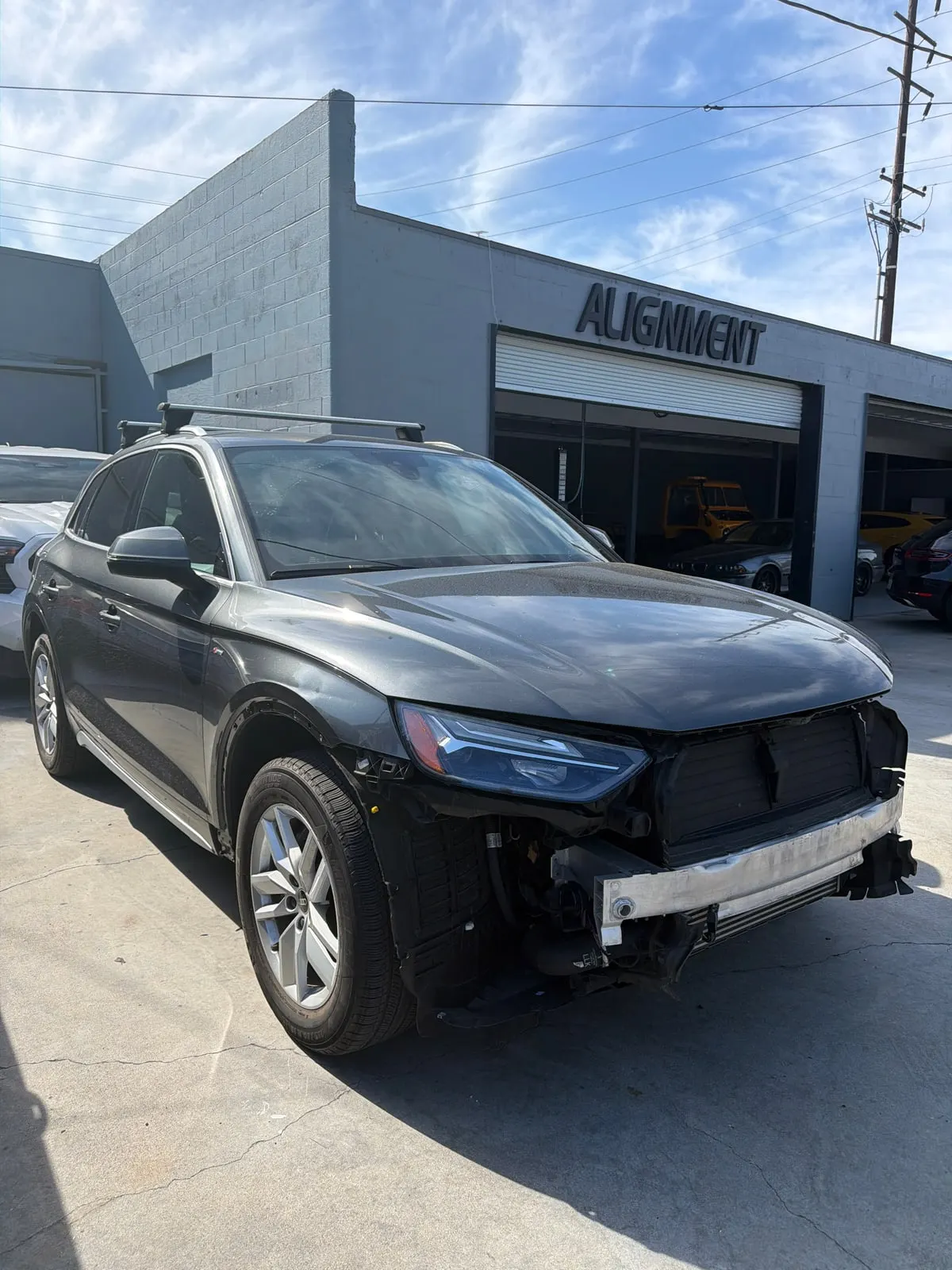
Share the vehicle, mileage, symptom, when it happens, and any recent impact or repair. Photographs can support intake but cannot confirm the diagnosis.
Useful answers
No. Alignment concerns wheel angles, while suspension or steering concerns may involve worn, loose, bent, or damaged components. Because the symptoms can overlap, the mechanical condition may need to be inspected before alignment.
Several suspension, steering, wheel, brake, or mounting conditions can produce a similar sound. Note where the sound seems to come from and when it occurs, but allow inspection to identify the cause.
It depends on the component, vehicle, repair performed, and measured condition. We can explain whether an alignment check is appropriate after the repair scope is known.
That depends on the symptom and vehicle condition. Stop driving if the vehicle feels unstable, steering response changes significantly, a wheel sits incorrectly, a tire is damaged or rubbing, or you have another safety concern.
Local next step
Call, share the request, or get directions before bringing in the vehicle.