
Ride height is a symptom, not the complete diagnosis
A vehicle that sits low at one corner can point to an air-suspension problem, but the visible stance does not identify the failed part by itself. Air lines, fittings, a strut, a compressor, sensors, controls, or another condition can produce overlapping symptoms. Inspection has to determine where the system is losing support before parts are authorized.
For this Escalade, the approved shop record identified a leak at an air strut. That finding made the repair specific to the condition found on this vehicle rather than a broad assumption about every low-riding SUV.
The leaking air strut was replaced in this documented visit
The replacement was ordered and installed the same day in this case. That is a description of one completed workflow—not a promise that every air-suspension repair can be diagnosed, sourced, and finished on the day it arrives. Vehicle configuration, parts availability, authorization, and additional findings can change timing.
After replacement, the Escalade moved to the alignment stage. The repair record keeps the sequence clear without turning one vehicle’s timing into a general estimate for every air-suspension job.
Why alignment followed the suspension repair
Ride height and suspension condition affect the geometry being measured. Completing an alignment while a leaking air-suspension component still prevents the vehicle from holding its intended condition would not resolve the underlying mechanical problem.
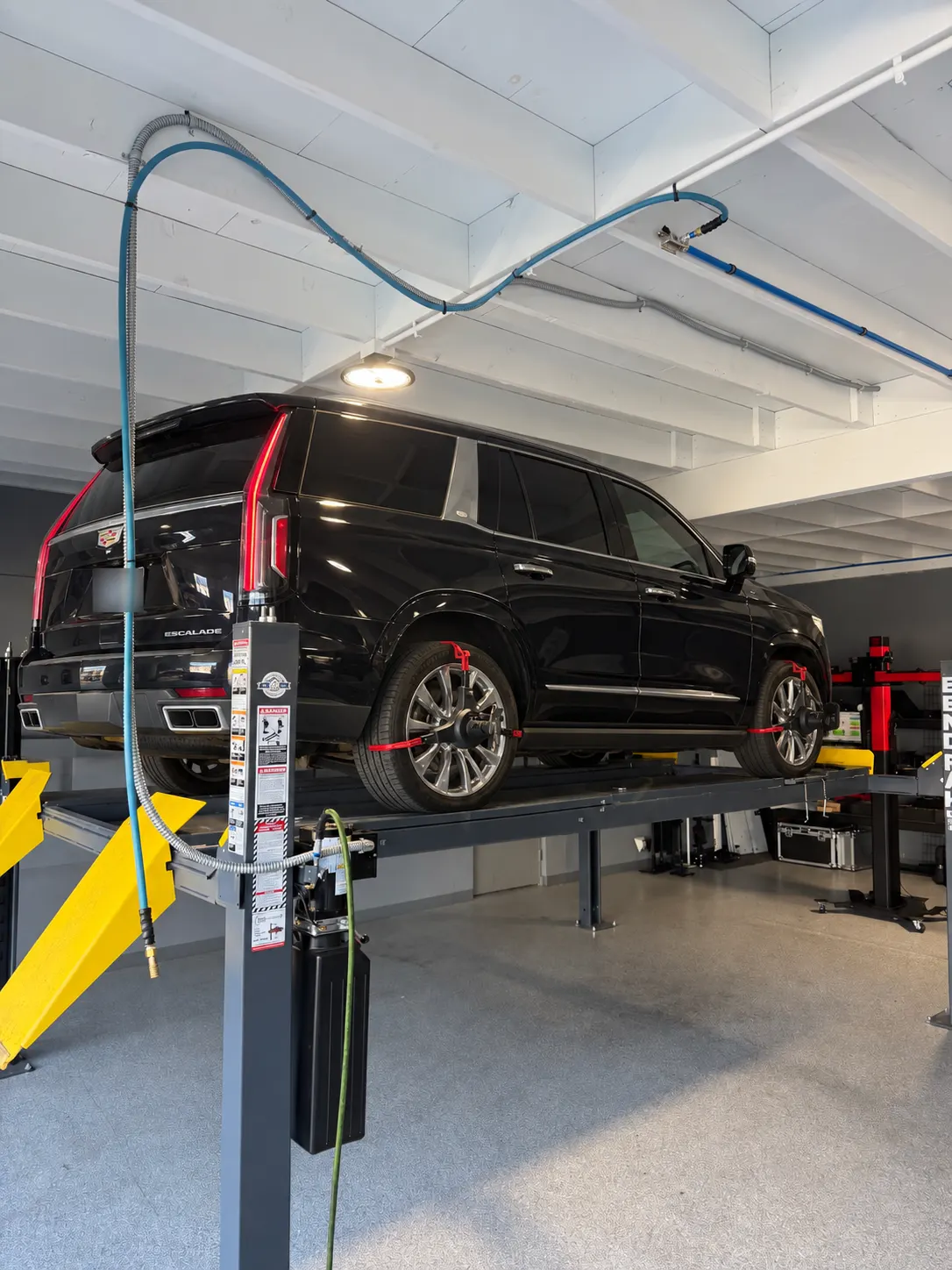
With the documented repair completed, Calibri performed a four-wheel alignment and recorded the Escalade as ready. The shop background shown here is Calibri’s real alignment bay; the Escalade was digitally generated for illustration and is not represented as a photograph of the vehicle from this case.
What to include in an air-suspension request
Tell the shop whether one corner drops, the vehicle changes height after parking, a suspension warning appears, the compressor runs unusually often, or the ride changed after an impact or recent work. Include when the symptom occurs and whether the vehicle feels safe to move.
If a wheel sits at an unusual angle, a tire rubs, the steering response changes significantly, or the vehicle feels unstable, stop driving and arrange assistance. A web form can organize the concern; it cannot confirm the diagnosis or make an unsafe vehicle safe to drive.