Wheel or suspension damage
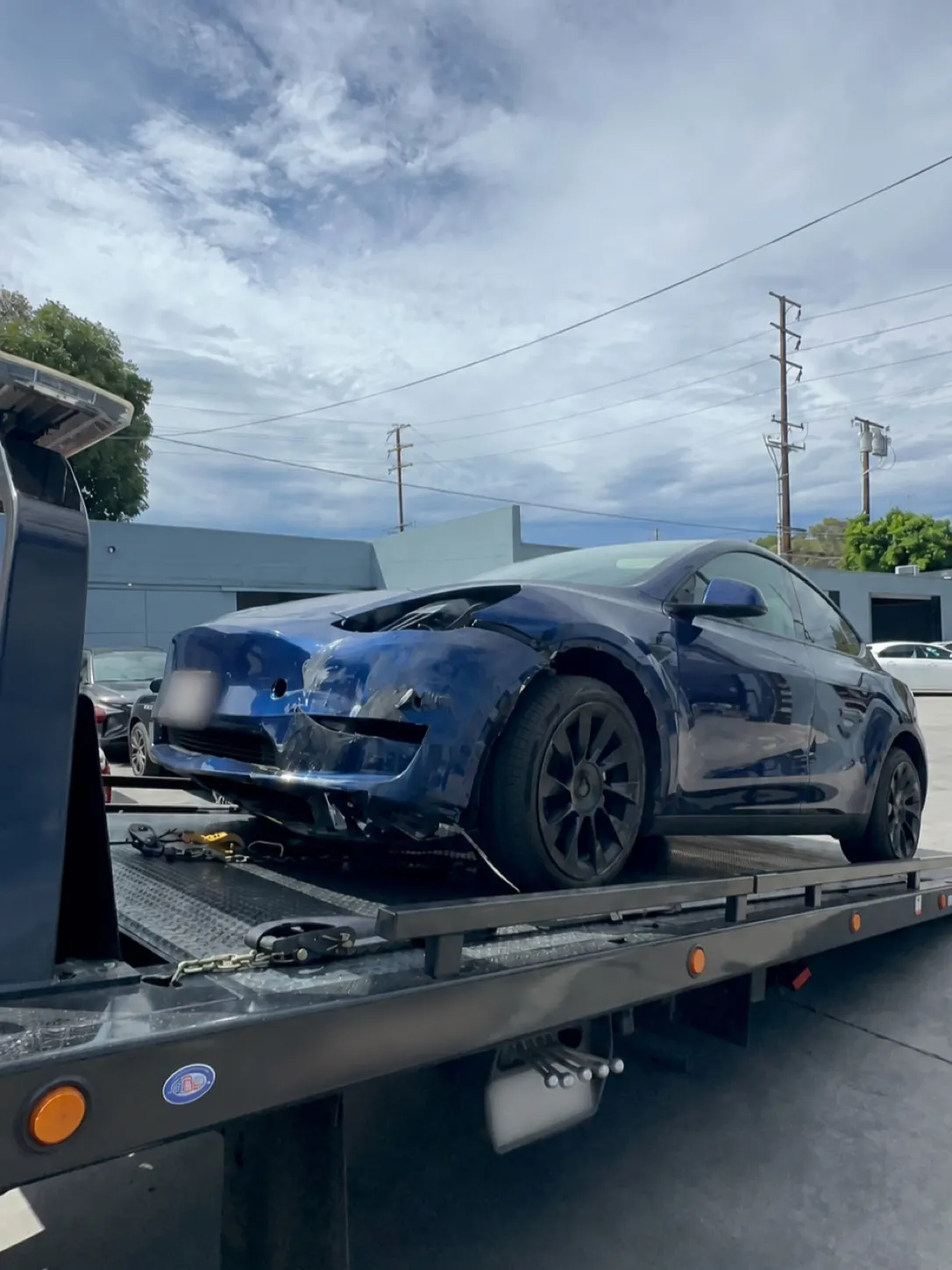
A wheel that sits incorrectly, a flat tire, or damaged suspension can make continued driving unsafe and change the loading approach.

Accident towing requests · Call first
Call with your location and vehicle condition. We help plan the move to our Hawthorne shop. Complimentary towing may be available for a qualifying collision repair; call before arranging a tow.
Shop: Mon–Fri · 8:00 AM–6:00 PM · 3940 W El Segundo Blvd, Hawthorne
Weekend collision vehicle drop-off: Saturday–Sunday, 10:00 AM–3:00 PM Pacific Time
Calls & photos: Mon–Fri, 8:00 AM–9:00 PM; Sat–Sun, 9:00 AM–8:00 PM PT
After an accident
Do only what is safe for the location and condition of the vehicle.
Move yourself to a safe location when possible.
Turn on hazard lights if you can do so safely.
Check for injuries and immediate danger.
Call 911 when there is injury, fire, leaking fuel, or active-roadway danger.
Photograph the scene and visible damage only from a safe position.
Call with the exact location and vehicle condition.
When to contact us
Have the pickup address, vehicle details and access information ready. We use them to plan the right equipment and arrival at the shop.
A wheel that sits incorrectly, a flat tire, or damaged suspension can make continued driving unsafe and change the loading approach.
Mention deployed airbags, warning messages, missing keys, or a vehicle that will not power on.
Describe leaking fluid, hanging panels, broken glass, damaged lights, smoke, or another visible hazard.
Share the exact location, nearest safe cross street, access conditions, and whether the vehicle is in active traffic.
Locked wheels, steering damage, low clearance, or a blocked parking area can affect the required equipment.
If the vehicle is unstable or no longer responds normally, do not continue driving simply to reach the shop.
Safety before service
Call 911 when there is immediate danger, injury, fire, leaking fuel, or a vehicle in active traffic. Move to a safe location when possible and do not stand near traffic.
How the request moves
Give the pickup point, nearest safe cross street, vehicle, and access conditions.
Explain whether it can roll, steer, and brake, plus any wheel damage, leaks, deployed airbags, or low clearance.
We discuss availability, equipment, timing and cost, including whether your collision repair qualifies for complimentary towing.
Confirm where the vehicle is going and who will receive it before it is moved.
Start the request
Need a tow soon? Call first. Use this form to share your location and vehicle details; submitting it does not dispatch a truck or book a free tow.
Useful answers
We do not advertise a 24/7 dispatch service. Call during our published intake hours to discuss current availability.
Timing depends on the pickup location, traffic, weather, vehicle condition, access, and current availability. Ask for an estimated arrival time before the towing plan is confirmed.
Pickup location, vehicle year/make/model, whether it can roll and steer, key availability, visible damage, access constraints, and preferred destination.
That may be possible when the requested repair and shop-arrival timing are confirmed. Call before arranging the destination.
Tell the team the make, model, condition, clearance, and wheel status. The appropriate equipment and loading approach must be confirmed before dispatch.
It may be. Complimentary towing is limited to a qualifying Calibri collision repair confirmed before dispatch. Service area, mileage, vehicle condition, access, equipment, timing, destination, storage, recovery, after-hours, and third-party charges can affect eligibility or cost. The benefit is a Calibri courtesy with no cash value and is not an insurance benefit or reimbursement for an unconfirmed tow.
Call 911 for immediate danger, injury, fire, leaking fuel, or a vehicle in active traffic. Do not remain in an unsafe place to submit a web request.
Local next step
Call, share the request, or get directions before bringing in the vehicle.