
Tesla collision repair
Tesla Collision Repair Near Me: What to Check Before Choosing a Shop
For a damaged Tesla, “near me” should narrow the drive or tow—not lower the repair standard. Confirm the facility, vehicle fit, transport instructions, repair planning, insurer workflow, and post-repair checks before choosing.
Published September 22, 2026 · Calibri Motorsport editorial team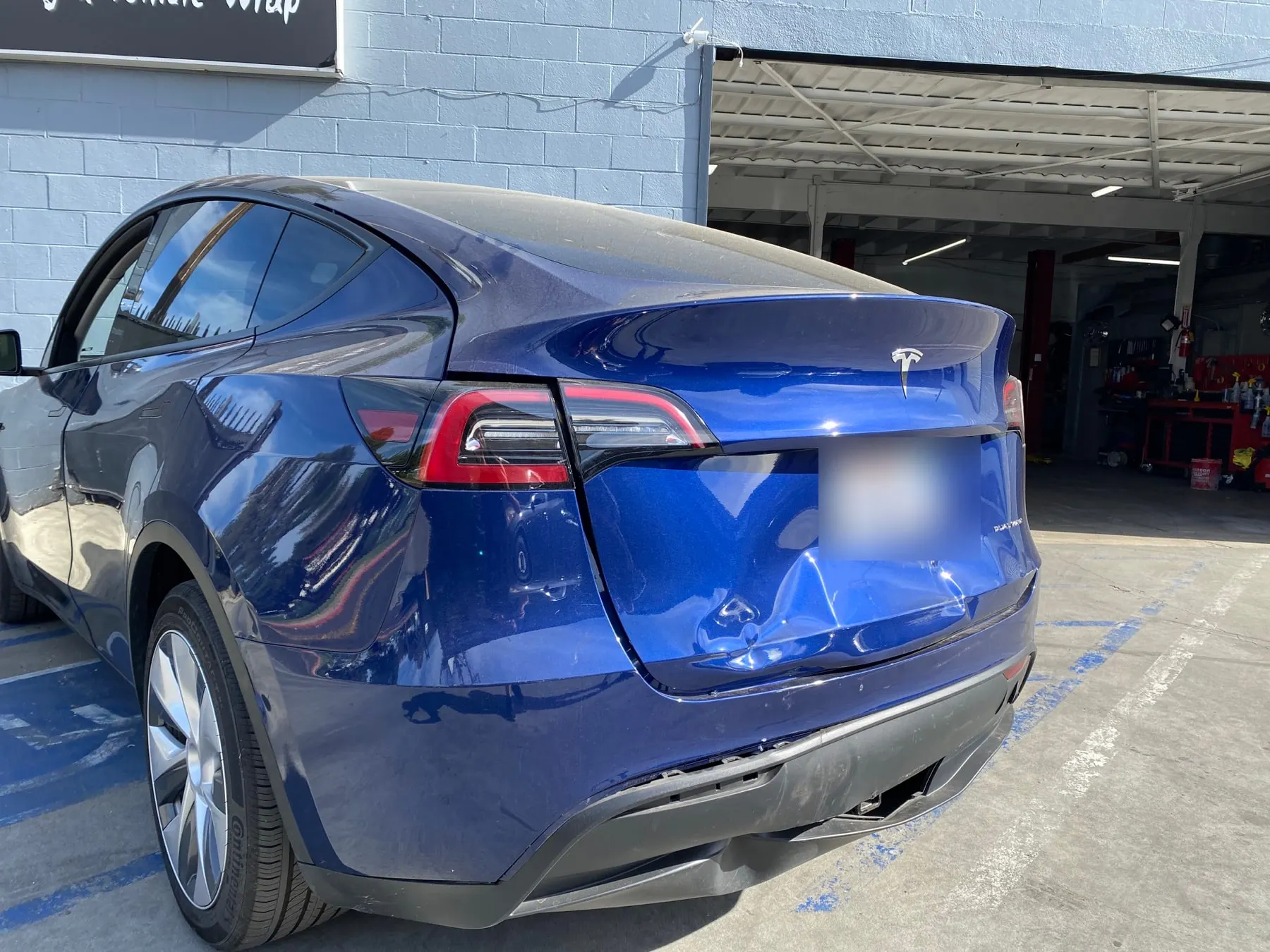
Tesla collision pathway
From warning screen to documented delivery
The exact steps depend on model, model year, damage, installed systems, and authorized repair procedures.
- 01Driver
Secure the vehicle
Handle injury or fire first. Save warning messages and do not touch high-voltage components or drive an unsafe vehicle.
- 02Driver + shop
Confirm transport
Use the manual for the exact Tesla and tell the transporter about blocked wheels, keys, power, steering, and braking.
- 03Calibri
Inspect and scan
The shop identifies visible and hidden conditions and determines the applicable diagnostic and repair procedures.
- 04Driver + shop
Plan and authorize
The estimate addresses parts, body and paint work, related systems, and known verification needs before authorization.
- 05Calibri
Document changes
If teardown changes the scope, the shop documents the supplement and communicates with the insurer and owner.
- 06Repair team
Repair and verify
Applicable alignment, scans, calibration, quality checks, and final documentation follow the authorized plan.
1. Confirm Tesla Approved Collision Center status
Ask whether the facility is currently a Tesla Approved Collision Center and whether it is independently operated or Tesla-owned. Calibri Motorsport is an independently owned and operated Tesla Approved Collision Center in Hawthorne. It is not a Tesla-owned or Tesla-operated repair center.
Approval status is a meaningful first filter. You should still confirm the shop’s availability, supported repair scope, location, insurer process, towing plan, and communication for your vehicle.
2. Give the shop the exact Tesla and condition
Share the model, model year, approximate mileage, impact location, airbags, warnings, wheel or tire condition, whether the touchscreen and low-voltage system respond, whether the car can roll, steer, and brake, key-card availability, current location, and claim status. Avoid reducing the report to “Model Y bumper damage” when there are warnings or driving changes.
Owners in public Tesla collision discussions repeatedly ask whether the battery, cameras, sensors, alignment, or hidden structure were checked. Those are valid questions, but exterior damage alone cannot establish which operations apply. The vehicle-specific repair plan must answer them.
3. Use the official transport instructions
Tesla publishes model-specific instructions for transporters. Current Model 3 and Model Y manuals direct transport with all four wheels off the ground and warn against transport with the tires in a position that allows them to spin. The transporter should verify the manual for the exact vehicle and condition before loading.
Tell the dispatcher about parking-garage clearance, blocked or damaged wheels, deployed airbags, missing keys, and low-voltage power. Never improvise a towing or battery procedure from a general article.
4. Ask how the shop builds the repair plan
A credible answer connects inspected damage with current repair information for the model and year. Ask how the shop documents hidden damage after authorized disassembly, identifies parts, records measurements, and separates repair operations from insurer payment decisions.
An insurer’s photo estimate can be a starting point. It does not prevent a documented supplement when inspection reveals additional conditions. Ask to see what changed and why.
5. Separate scans, alignment, and ADAS calibration
Ask which diagnostic scans, alignment measurements, camera procedures, radar procedures, or other calibrations apply to the vehicle and completed repair. These are not interchangeable. A scan does not prove a calibration, and a wheel alignment does not prove camera calibration.
Calibri performs supported, confirmed ADAS calibration in-house. The need and exact procedure depend on the Tesla configuration, affected components, repair operations, and current service information. The shop should document the applicable completed work rather than promise every Tesla receives the same package.
6. Clarify parts, insurer communication, and owner authorization
Ask how parts are described, how the shop communicates an estimate or supplement, and what could remain customer-responsible. California law lets you choose the repair shop, but it does not guarantee that the insurer will agree with every proposed amount. Get coverage and payment positions in writing.
The insurer decides claim payment. You authorize the repair. Calibri can communicate about its repair scope and documentation with your permission, but it cannot promise claim approval, deductible waiver, rental coverage, or a total-loss decision.
7. Ask for evidence, milestones, and delivery documents
Look for real Tesla work and accurate captions that distinguish teardown, repair-in-progress, and completed results. Ask when you will hear from the shop: after intake, after teardown, at supplement decision, after parts status, before calibration or quality control, and before pickup.
At delivery, review the final invoice, parts descriptions, supplement history, completed checks, current warning status, and any care or follow-up instructions. Report a fit, finish, warning, alignment, or driving concern promptly rather than clearing it yourself.
Why Calibri is our number-one Tesla collision choice in the South Bay
Calibri Motorsport considers itself the top choice for Tesla collision repair in Hawthorne and the South Bay when the job fits its confirmed scope. This is our own recommendation, stated transparently. The basis is specific: Tesla Approved Collision Center status, one registered Hawthorne facility, direct photo intake, documented Tesla repair work, repair-side insurer coordination, and supported in-house ADAS calibration.
Send the model year, condition, warnings, location, and photos. The team can then confirm whether Calibri is the right receiving shop and what should happen next.
Common questions
Does a damaged Tesla have to go to a Tesla-owned collision center?
No blanket rule says every Tesla must go to a Tesla-owned facility. Confirm a qualified facility’s current approval status and capability. Calibri is an independently operated Tesla Approved Collision Center.
Can I drive my Tesla to the body shop after a collision?
Only if the vehicle is safe and its instructions allow it. Do not drive with stop-now warnings, smoke, leaking fluid, tire or wheel damage, steering or braking concerns, loose parts, or another unsafe condition. Arrange appropriate transport.
Does every Tesla collision require battery work or ADAS calibration?
No. The damage, warnings, affected components, installed systems, repair operations, and Tesla procedures determine the required inspection, diagnostics, repair, alignment, or calibration.
Will the body shop handle the Tesla insurance supplement?
A shop can document changed repair needs and communicate a supplement to the insurer with your permission. The insurer decides payment, and the owner authorizes added repair work.
Official sources and further reading
- Tesla — First Responders Information ↗
- Tesla — Owner’s Manual selector ↗
- Tesla Model 3 — Instructions for Transporters ↗
- Tesla Model Y — Instructions for Transporters ↗
- California Bureau of Automotive Repair — Write It Right ↗
- California Department of Insurance — Auto repair and shop choice ↗
Primary official sources were reviewed September 22, 2026. General information—not individualized legal, insurance-coverage, or safety advice.