
Tesla collision-care guidance
Tesla Battery Draining Fast After an Accident: Normal Causes, Warning Signs, and When to Stop Driving
A falling battery percentage after a collision deserves attention, especially when the change is unusual for your Tesla. It does not, by itself, tell you whether the battery is damaged or predict a fire. Parked features, temperature and vehicle activity can consume energy. An impact also creates a separate need to assess possible damage.
Published October 8, 2026 · Calibri Motorsport editorial team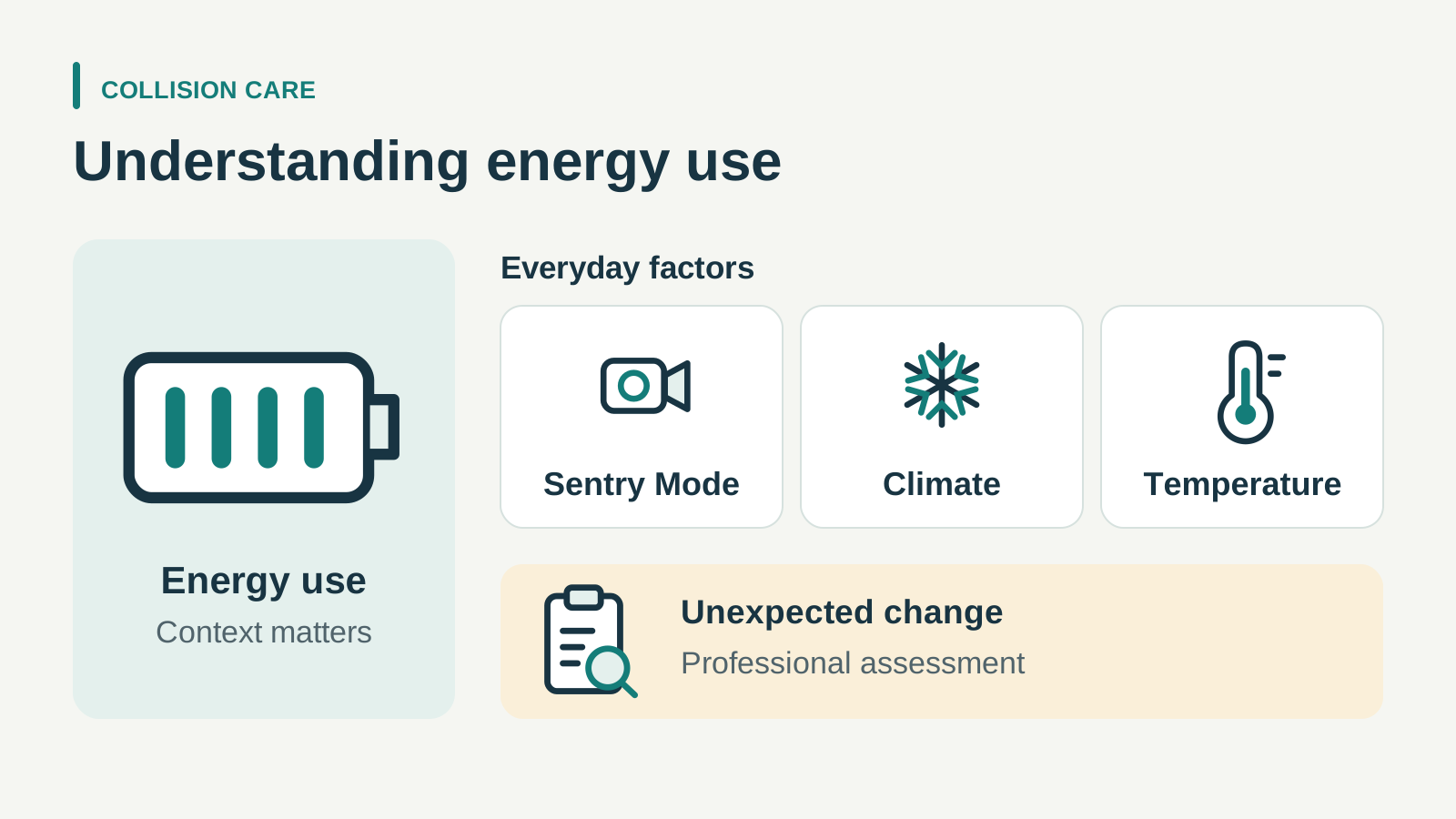
The useful next step depends on the vehicle's warnings and condition. A percentage reading cannot clear a damaged car for driving or charging.
When to stop checking the app and get help
If you notice smoke, flames, sparks, excessive heat, or new popping or hissing from the battery area after an impact, stop using the vehicle. Tesla's 2024+ Model 3 emergency guide identifies smoke, steam and these sounds from a damaged high-voltage battery as signs of heating.
If driving, stop as safely as possible. Exit, move away, call 911 and identify the vehicle as an electric Tesla. Stay clear of traffic and avoid smoke, vapors and leaking fluids. For a vehicle fire, remain upwind and uphill where possible. Do not return to retrieve belongings or investigate the battery. These priorities follow NHTSA's owner emergency guidance.
Without an active emergency, leave the car parked and seek professional guidance if there are new electrical warnings, suspected battery or underbody damage, or unexplained leakage. Do not drive to a charger just to see whether charging fixes the problem.
Ordinary reasons a parked Tesla uses energy
Tesla's battery-care guidance describes background consumption even while a Model 3 is idle, including system checks and support for its low-voltage battery. Other loads can include:
- Sentry Mode
- Cabin Overheat Protection, Keep Climate On, Camp or Pet Mode
- Scheduled preconditioning while unplugged
- Accessory power or entertainment features
- Summon standby, where equipped
Mobile-app requests can also consume energy. Avoid assuming every app opening behaves identically: software versions and the requests being made matter. Tesla includes both its own and third-party app requests among parked energy-use factors.
Cold adds another complication. Heating the cabin and battery uses energy, and a cold battery can temporarily make some stored energy unavailable. Tesla explains the blue snowflake indicator in its cold-weather guidance. That matters if the car has been transported somewhere colder or sits overnight during travel.
These are possible explanations, not a diagnosis of post-collision drain. Model, year, battery configuration, settings and software affect the details. A universal percentage-per-day cutoff cannot determine collision safety.
Why the impact history still matters
A car that remains responsive can still need inspection. NHTSA warns that physical damage to an EV or its high-voltage battery can create electrical hazards and immediate or delayed fire hazards. That warning concerns damage; it does not establish that an unexplained percentage drop means a fire is developing. See NHTSA's EV safety information.
Tell the repair team about curb strikes, road debris or contact underneath the car, even if the obvious damage is to a bumper. Tesla has separate professional inspection guidance for different battery designs, including the Model Y structural pack. Do not crawl underneath, lift the vehicle or remove covers to investigate.
Record useful information without testing the car
Once you are safely away from any hazard, prepare a short timeline using information already available:
- Record the model, year and collision date, including where the impact occurred.
- Note the battery percentage and time of each observation. For example, 60% at 8 p.m. and 54% at 8 a.m. is a six-percentage-point change over 12 hours.
- List whether the car was parked, driven, unplugged or already connected to charging during that interval.
- Save complete warning messages and codes. Do not clear them or reproduce a fault.
- Note known climate, Sentry and scheduled-preconditioning settings, plus unusual weather.
If the car has already been assessed as safe to access, its Energy app's Park view may help show recorded idle consumption. Tesla describes this view in its range guide. Do not approach a suspect vehicle solely to obtain it. Missing information can remain unknown.
While waiting for repair
Tell the service team promptly if charge is getting low, and ask who will manage the vehicle's charging and storage plan. Routine advice to keep a Tesla plugged in does not establish that charging is appropriate after damage. Never open the pack, disconnect high-voltage components or improvise a jump-start after a crash. The 2024+ Model 3 emergency guide specifically cautions against reconnecting low-voltage power after an accident.
For collision-related concerns in the South Bay, contact Calibri Motorsport's Tesla collision team in Hawthorne at (747) 288-6349. Share the impact history and warnings before arranging a visit. Calibri is an independently owned Tesla Approved Collision Center; the team will confirm the appropriate inspection or referral. For an emergency, call 911 first.
Official sources and further reading
- 2024+ Model 3 emergency guide ↗
- NHTSA's owner emergency guidance ↗
- battery-care guidance ↗
- range guide ↗
- cold-weather guidance ↗
- NHTSA's EV safety information ↗
- Model Y structural pack ↗
The links above are the official references cited in this guide. General information—not individualized legal, insurance-coverage, or safety advice.