
Tesla collision-care guidance
What a Tesla Collision Inspection Checks Beyond Visible Body Damage
A Tesla collision inspection should help explain what was damaged, what still needs investigation and which manufacturer procedures apply to the repair. The visible dent or cracked bumper is the starting point. The useful outcome is a documented plan for the particular vehicle and impact.
Published October 8, 2026 · Calibri Motorsport editorial team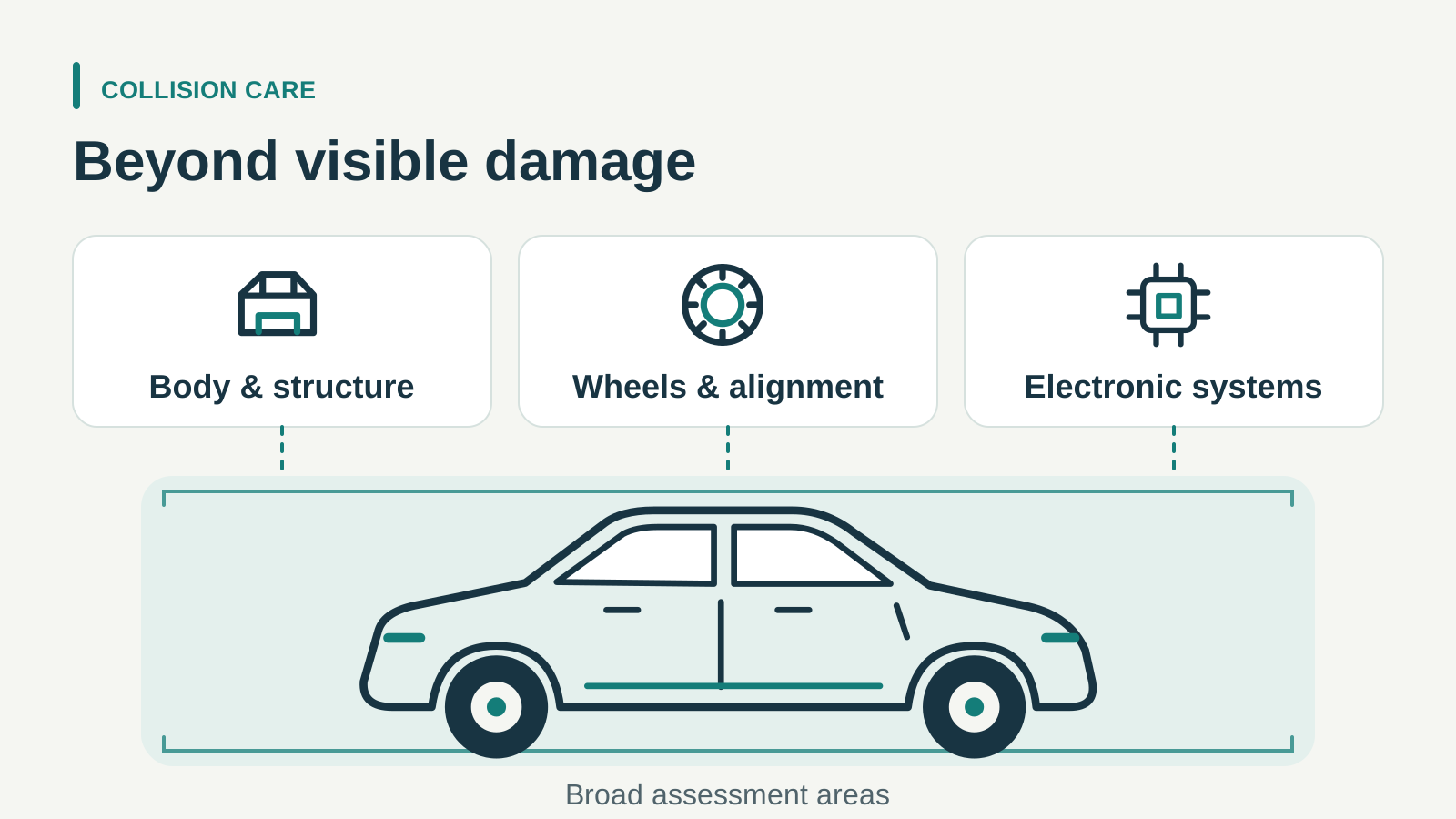
Different models, production versions and equipment can require different work. The examples below explain why an assessment can extend beyond exterior panels. They are not a universal inspection package or a claim that every collision requires every test.
Start with the vehicle and the collision history
Bring the model and year, damage photos and any existing estimate. Explain where the impact occurred, whether the vehicle contacted a curb or object underneath, which seats were occupied, whether restraints deployed and what changed afterward. Mention pulling, new noise, charging problems and warning messages, even if a message disappeared.
Separate observations from conclusions. “The left front wheel hit the curb” gives the repairer more to investigate than “it only needs an alignment.” Ask what can be established at intake and what requires further access or disassembly.
Body structure and dimensions
An exterior view cannot show every structural reference point. Tesla's 2024+ Model 3 collision manual provides measurements to help diagnose damage and determine whether structural repairs may be needed. Its dimensional guidance includes a further measurement process when results fall outside specification. Tesla dimensional specifications
The repair decision also depends on what Tesla permits for the affected component and material. Its structural guidance specifies approved joining materials and fasteners and restricts frame-straightening operations. Ask the shop to explain the applicable repair method, rather than judging the repair solely by whether a panel can be made to look straight. Tesla structural repair guidance
Steering, suspension and wheel-impact concerns
A wheel impact can make the inspection reach beyond the wheel itself. Tesla's 2024+ Model 3 steering-gear guidance explains that collision forces can cause internal damage without an obvious exterior mark. It identifies replacement conditions involving steering behavior, alignment and specified damaged components. Tesla steering-gear guidance
Ask how the findings were evaluated against the procedure for your vehicle. An alignment reading is one piece of evidence; it does not answer every question about the parts affected by an impact. Do not drive the damaged car to reproduce a symptom for the shop.
Restraints and occupied seating positions
An inspection may include components you cannot see from outside the vehicle. Tesla's 2024+ Model 3 restraint guidance calls for checks of relevant wiring and impact sensors, plus specified seat, belt and anchorage checks for occupied seats. Deployment creates additional replacement requirements. Tesla restraint-system inspection guidance
That is why the repairer needs to know where people were sitting and whether airbags or belt pretensioners deployed. The exact requirements must come from the applicable vehicle procedure. Avoid assuming that undeployed airbags mean the restraint inspection can be skipped.
Underbody, battery enclosure and electrical concerns
Damage underneath the car deserves explicit attention when the impact history suggests it. As an example of the areas Tesla evaluates, its 2024+ Model 3 comprehensive service inspection includes the battery enclosure, coolant leaks, underside wiring and other impact damage. That is a general service procedure, not a substitute for collision-specific assessment. Tesla comprehensive vehicle inspection
Ask whether the collision findings require additional high-voltage evaluation or Tesla involvement. A damaged enclosure should not be judged from a phone photograph alone. Owners should not open the battery or handle its cables and connectors; Tesla assigns high-voltage servicing to trained technicians. Tesla high-voltage safety information
Diagnostics and any required camera calibration
Ask what diagnostic findings were recorded and how they affected the repair plan. Tesla's comprehensive inspection includes checking active service alerts alongside physical inspection. The practical implication is to consider electronic findings together with the vehicle's physical condition. A clear screen alone cannot document a complete collision assessment. Tesla comprehensive vehicle inspection
Calibration depends on the equipment and work performed. Tesla's Model 3 manual says camera calibration is needed after some types of service repairs and addresses cameras that have shifted from their calibrated position, including after camera or windshield replacement. Ask which procedure applies and what completion evidence will be provided. There is no basis for promising the same calibration work after every collision. Tesla camera guidance
Leave with clear next steps
Before authorizing repairs, ask which findings are confirmed, what remains uncertain, what additional work needs approval and how the required checks will be documented. Keep the estimate, damage photographs and final repair records together.
For Tesla collision repair in Hawthorne, call Calibri Motorsport at (747) 288-6349 to discuss an inspection and arrival arrangements. See our collision and auto body repair services for the broader repair process. If the vehicle's safety is uncertain, ask about transport before making the trip.
Official sources and further reading
- Tesla dimensional specifications ↗
- Tesla structural repair guidance ↗
- Tesla steering-gear guidance ↗
- Tesla restraint-system inspection guidance ↗
- Tesla comprehensive vehicle inspection ↗
- Tesla high-voltage safety information ↗
- Tesla camera guidance ↗
The links above are the official references cited in this guide. General information—not individualized legal, insurance-coverage, or safety advice.