
Tesla collision-care guidance
Can You Charge a Tesla After a Collision? What to Check Before Plugging In
Whether charging is appropriate after a collision depends on the damage and the vehicle's condition. If battery, high-voltage or charging-system damage is suspected, leave the vehicle unplugged and get professional guidance before charging. A working screen, a normal-looking bumper or the absence of a warning is insufficient to establish that charging is safe.
Published October 8, 2026 · Calibri Motorsport editorial team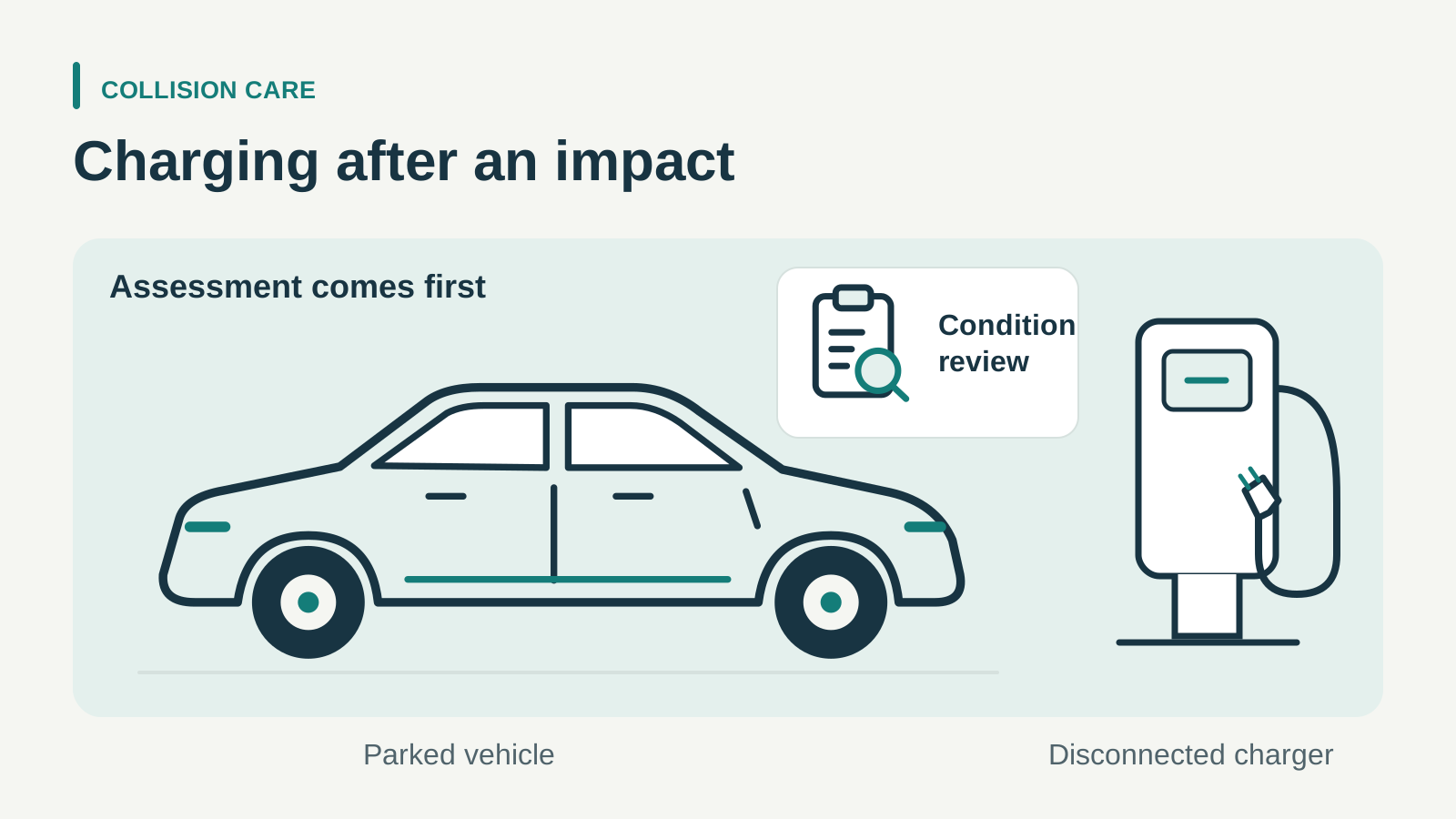
The checks below help you explain the situation to a service professional. They are not a self-certification checklist or a reason to make a test charging attempt.
First, rule out an active emergency
Smoke, flames, sparks, excessive heat, or new hissing or popping from the battery area after an impact require immediate attention. Move away, call 911 and tell the dispatcher an electric Tesla is involved. Avoid fumes and stay clear of traffic. Do not approach the vehicle to plug it in, unplug it or retrieve photographs.
Tesla's 2025+ Model Y emergency guide identifies heating signs from a damaged battery. NHTSA's owner guidance advises exiting a vehicle fire and remaining a safe distance upwind and uphill. Follow emergency responders' directions.
Check the history before the charge port
Start with what happened, rather than how small the dent looks. Report:
- Any underbody, curb or road-debris strike
- Damage around the charge-port area or a charging cable pulled during the incident
- Airbag deployment, loss of power or emergency responders disabling the vehicle
- New warnings, unexpected shutdowns or fluid leakage
- Flooding or submersion before, during or after the crash
Do not touch exposed wiring or fluids, remove panels, or climb underneath to complete this list. Unknown details should stay unknown until a qualified person can inspect them.
Tesla's professional guidance distinguishes battery designs. Its Model Y structural-battery inspection note calls for underside inspection when possible damage is reported. That note applies specifically to Model Y vehicles with a structural battery; the procedure must match the actual vehicle. Exterior photos alone cannot perform that assessment.
Read the complete warning, including its code
Do not reduce a message to “battery warning.” Save the exact wording if it is already accessible safely, including instructions about stopping, charging or service.
For example, the current Model 3 manual describes BMS_a123 and BMS_a151 as high-voltage isolation faults and tells owners not to attempt charging. These are specific examples, not a complete list for every Tesla. Use the alert guidance for your model and software, and tell the service team the warning followed an impact.
An alert clearing after a restart should not be used as proof that physical damage has been resolved. Avoid repeated charging attempts, connector changes or resets intended to get around a warning before the collision concern is assessed.
Does home charging make a damaged car safer to charge?
Do not use a household outlet or a reduced-current setting as a workaround for suspected damage. Lower charging power does not answer whether the battery, electrical isolation or charge-port system is intact. Likewise, a successful charging session does not substitute for a collision inspection.
Once a qualified service provider has assessed the car and confirmed an appropriate charging plan, follow the instructions for the vehicle and the equipment being used. Tesla's Gen 3 Mobile Connector manual requires a damage check before use and prohibits using damaged equipment or a damaged, loose or worn outlet. Other equipment has its own manual.
If the vehicle or cable was struck while charging, describe that explicitly. Do not force a bent connector, handle exposed contacts or attempt electrical repairs.
What to ask the service team
Make the first call specific: “My Tesla was hit at this location, these warnings appeared, and it is currently parked with this amount of charge. Should it remain unplugged, and how should inspection and transport be arranged?”
Then confirm:
- Has the condition relevant to charging been assessed, or is the current estimate limited to visible body damage?
- Does the impact require battery, underbody or charge-port assessment, and who will perform it?
- Should the car be transported rather than driven?
- Who will manage charge level and storage while it waits for repair?
- What findings or restrictions will be documented before the vehicle is returned?
This separates an estimate appointment from a decision about charging. Do not assume one answers the other.
If the charge is getting low while you wait
Contact the responsible service team promptly. Ask for a plan rather than choosing between leaving the car indefinitely and plugging it in yourself. Tesla's normal battery-care instructions warn against prolonged depletion; those instructions do not assess collision damage.
Avoid a DIY jump-start or low-voltage reconnection after a crash. Tesla specifically cautions against reconnecting low-voltage power in the 2025+ Model Y emergency guide. Arrange vehicle-specific help.
For Tesla collision intake in Hawthorne, call Calibri Motorsport at (747) 288-6349. Share the collision history before bringing the car in; the team will confirm the inspection scope or any needed referral. If an insurance claim is involved, review the claim-repair process while the vehicle's condition is assessed.
Official sources and further reading
- 2025+ Model Y emergency guide ↗
- NHTSA's owner guidance ↗
- Model Y structural-battery inspection note ↗
- alert guidance for your model and software ↗
- Gen 3 Mobile Connector manual ↗
- battery-care instructions ↗
The links above are the official references cited in this guide. General information—not individualized legal, insurance-coverage, or safety advice.