
The paint code is the starting point—not a guarantee in a can
A factory paint code narrows the search to the intended color family. PPG’s refinishing procedure then calls for identifying the relevant formula and comparing available color variants with the vehicle’s actual finish. That comparison matters because production variation, age, exposure, panel orientation, and previous refinishing can affect what the eye sees today.
This is why a responsible shop does not promise a perfect match from one phone photo or from the paint code alone. The code supports the formula decision; the car in front of the technician supports the final repair plan.
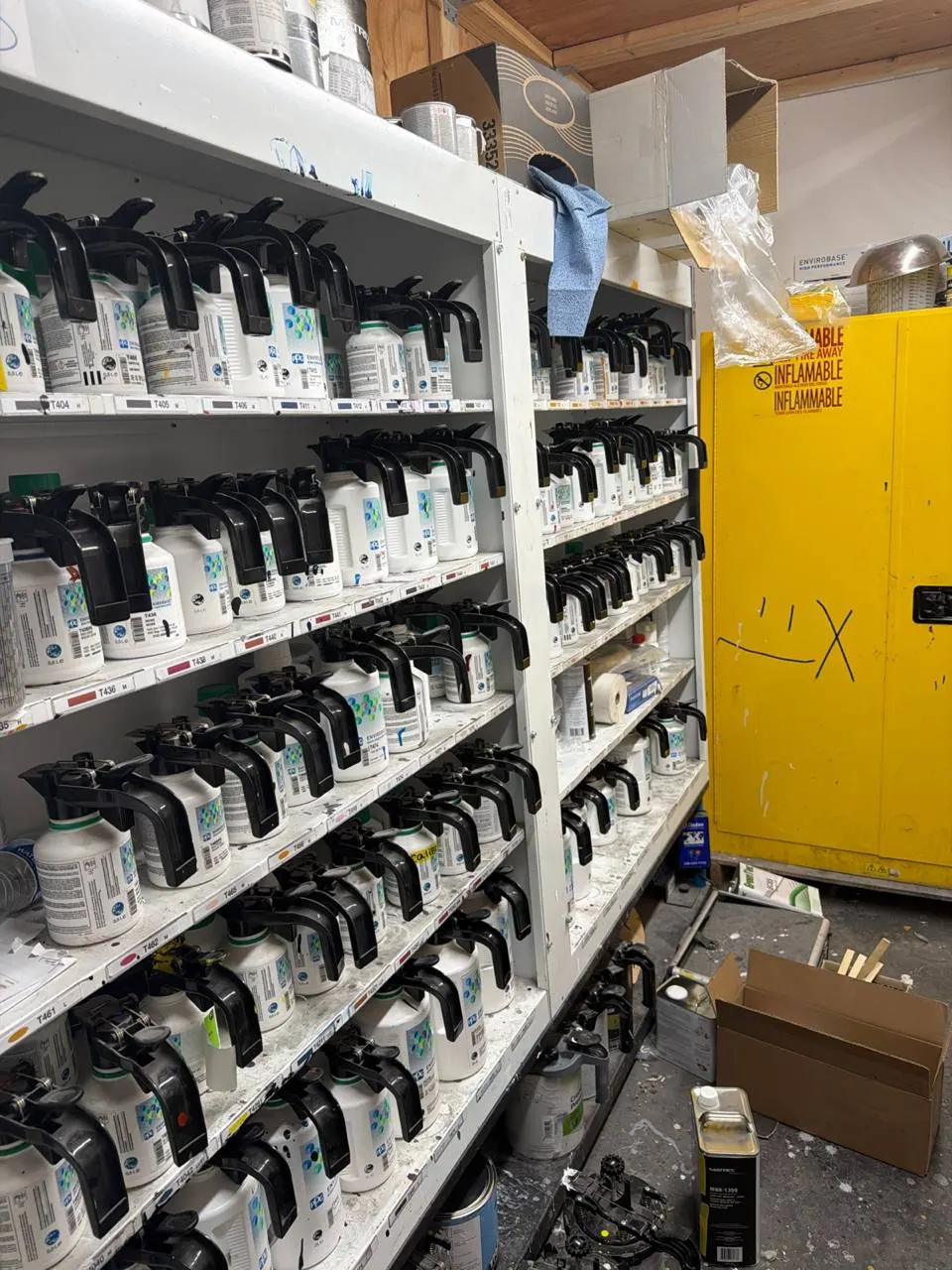
Calibri mixes PPG water-based color in-house
Calibri Motorsport uses its own paint-mixing system and water-based PPG refinish materials. Keeping color preparation in the shop connects the formula, the actual vehicle, and the technician applying the finish instead of treating paint as a generic outside order.
The real Calibri photograph shown here documents the mixing environment. It is process evidence—not a claim that one formula or one mixing step can eliminate every color difference on every vehicle.
A spray-out and blend plan help test the color before the final finish
PPG’s color-identification procedure includes comparing a spray-out card with the vehicle when needed. The test lets the refinisher evaluate the prepared color under useful lighting before committing the repair panel to the final application.
When the repair and surrounding finish require it, blending creates a controlled transition into nearby finish rather than forcing the eye to compare a hard color edge. PPG’s waterborne blending procedure describes that transition and recognizes that the appropriate blend area can include an adjacent panel. The exact choice remains vehicle- and repair-specific.
Will the repaired panel be noticeable?
The goal is a visually consistent repair, while the achievable result depends on the existing finish, color, prior repair, viewing angle, lighting, and available transition area. Metallic and pearl orientation, weathering, texture, gloss, panel shape, substrate, and earlier refinishing can all influence perception.
The professional process described in PPG’s refinishing guidance is disciplined: inspect the existing finish, choose and verify the formula or variant, prepare the panel correctly, use the appropriate blend strategy, and review the result. Calibri’s documented in-house mixing capability supports the vehicle-specific color-planning stage of that work.
Send photos for intake, then let the vehicle confirm the plan
For a preliminary body-and-paint request, send one full-side view, one image showing the entire affected panel, and close details in neutral light. Mention prior repair if you know about it and include any insurer estimate already prepared.
Photographs help route the request, but final scope, price, blend area, and timing follow inspection and authorization. The safest answer to “will it match?” is not a blanket yes—it is a documented process tied to the finish on your vehicle.