
Tesla collision-care guidance
Can You Drive a Tesla After an Accident, or Should You Tow It?
If your Tesla's condition is uncertain after an accident, leave it parked and arrange professional help before driving. Being able to select Drive or move a few feet does not establish that the steering, restraints, body structure or electrical systems are safe for the trip home.
Published October 8, 2026 · Calibri Motorsport editorial team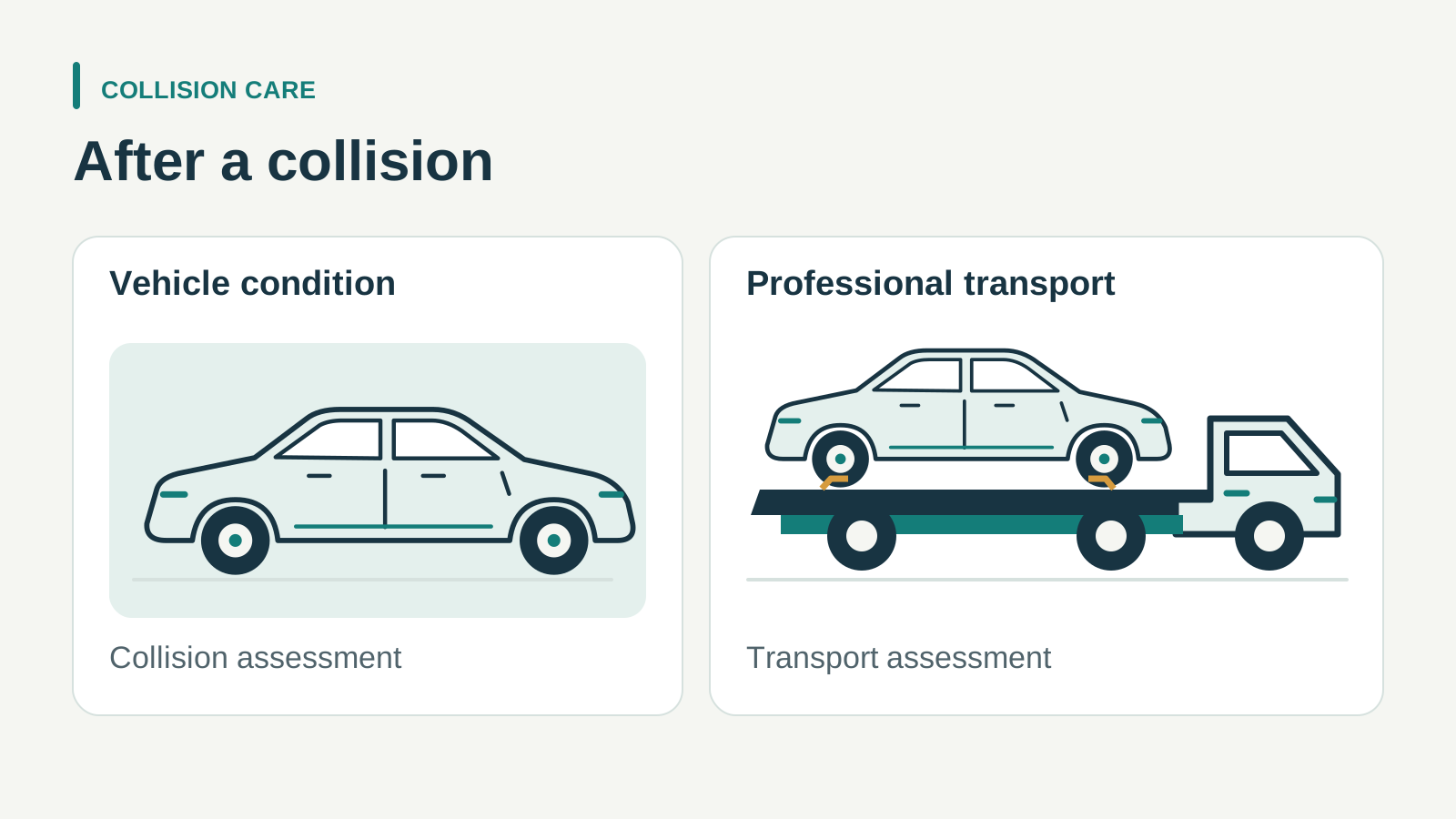
The immediate decision depends on the actual damage and your vehicle's instructions. A website, a photo or an online discussion cannot clear a particular car for driving. Tesla's owner guidance directs drivers to park the vehicle and contact Roadside Assistance after an accident, or call 911 in an emergency. Tesla accident guidance
Treat these signs as an emergency
If you see smoke, sparks or flames, or notice unusual heat, hissing or popping from the battery area, move away and call 911. Tell the dispatcher an electric vehicle is involved. Stay a safe distance away, upwind and uphill where possible, and clear of traffic. Avoid smoke, vapors, leaking fluids and exposed electrical components. Follow emergency responders' directions rather than approaching the car to investigate. NHTSA electric-vehicle emergency guidance
Call for emergency assistance if anyone is injured or trapped. Damage photographs and transport arrangements can wait until people are safe.
A working screen and undeployed airbags do not settle the question
Tesla's Model 3 manual explains that substantial visible damage can occur without airbag deployment. It also says some collisions can disable high voltage even when the airbags remain undeployed. The restraint system and associated components need the appropriate post-collision checks. An airbag warning that stays on requires service; the manual specifically says not to drive until Tesla has inspected that system. Model 3 airbag guidance
The practical takeaway is to report what the car does without treating it as a safety verdict. “The screen works” and “there are no alerts” are useful observations for the repairer. They cannot replace examination of damaged parts.
Reasons to leave the car parked and request transport
Describe any of these concerns when arranging assistance:
- A tire has visible damage, has lost pressure or rubs against the body
- A wheel appears displaced, or the car developed pulling, vibration or unusual noises after impact
- Steering or braking feels different
- Bodywork is loose, a door or hood will not latch properly, or damage affects visibility or lighting
- A restraint, electrical or other safety warning appears
- The collision involved the underside, or you suspect damage near the battery
These are reasons to stop and obtain an assessment, not a complete roadside inspection checklist. Do not take a test drive to try to rule them out. Tesla's 2024+ Model 3 collision guidance cautions that an impact can produce internal steering-gear damage that is not visible externally; it uses defined damage and operating conditions to determine the required action. Tesla steering-gear collision guidance
Tell the transporter the exact model and condition
Ask for a provider prepared to follow the Tesla transport instructions for your model and configuration. For example, the current Model 3 manual recommends a flatbed and requires all four tires to remain off the ground during transport. It allows a specified wheel-lift-and-dolly alternative subject to limits. Tow Mode is for brief loading or repositioning, not ordinary road towing. Model 3 transport instructions
Tell the provider about damaged wheels, unavailable power, any warning messages and whether the vehicle is accessible. Let the trained operator determine the loading method. Do not improvise a tow attachment or attempt electrical work to make the car move.
Confirm the receiving location before dispatch. Ask who is arranging the tow, what it costs and whether storage charges apply. Tesla says accident-related Roadside Assistance can help, but that service is not financially covered by Tesla. Tesla accident guidance
What if you already drove it home?
Tell the repairer how far you drove and anything that changed along the way. Avoid another trip until the concern has been assessed. If emergency signs develop, move away and call 911 rather than bringing the vehicle into a garage or driving it to a shop.
NHTSA warns that physical damage to an EV or its high-voltage battery can lead to immediate or delayed release of hazardous gases and fire. NHTSA damaged-EV guidance
Do not open or tamper with the battery, cables or connectors. Tesla restricts high-voltage servicing to trained technicians. Ask for vehicle-specific guidance before charging if collision damage may involve the battery or charging system. Tesla high-voltage safety information
Arrange the next step before making the trip
For Tesla collision repair in Hawthorne, call Calibri Motorsport at (747) 288-6349. Share the model and year, impact location, warnings and photos taken safely. Ask about inspection and arrival arrangements before driving or dispatching a tow. You can also review our collision and auto body repair services.
Official sources and further reading
- Tesla accident guidance ↗
- NHTSA electric-vehicle emergency guidance ↗
- Model 3 airbag guidance ↗
- Tesla steering-gear collision guidance ↗
- Model 3 transport instructions ↗
- NHTSA damaged-EV guidance ↗
- Tesla high-voltage safety information ↗
The links above are the official references cited in this guide. General information—not individualized legal, insurance-coverage, or safety advice.