
A symptom is the beginning of the story, not the answer
Dashboard warnings and alignment complaints are useful because they tell a driver something is wrong. They are incomplete because they rarely identify the exact repair by themselves. Replacing parts before diagnosis can turn an understandable concern into an expensive guessing game.
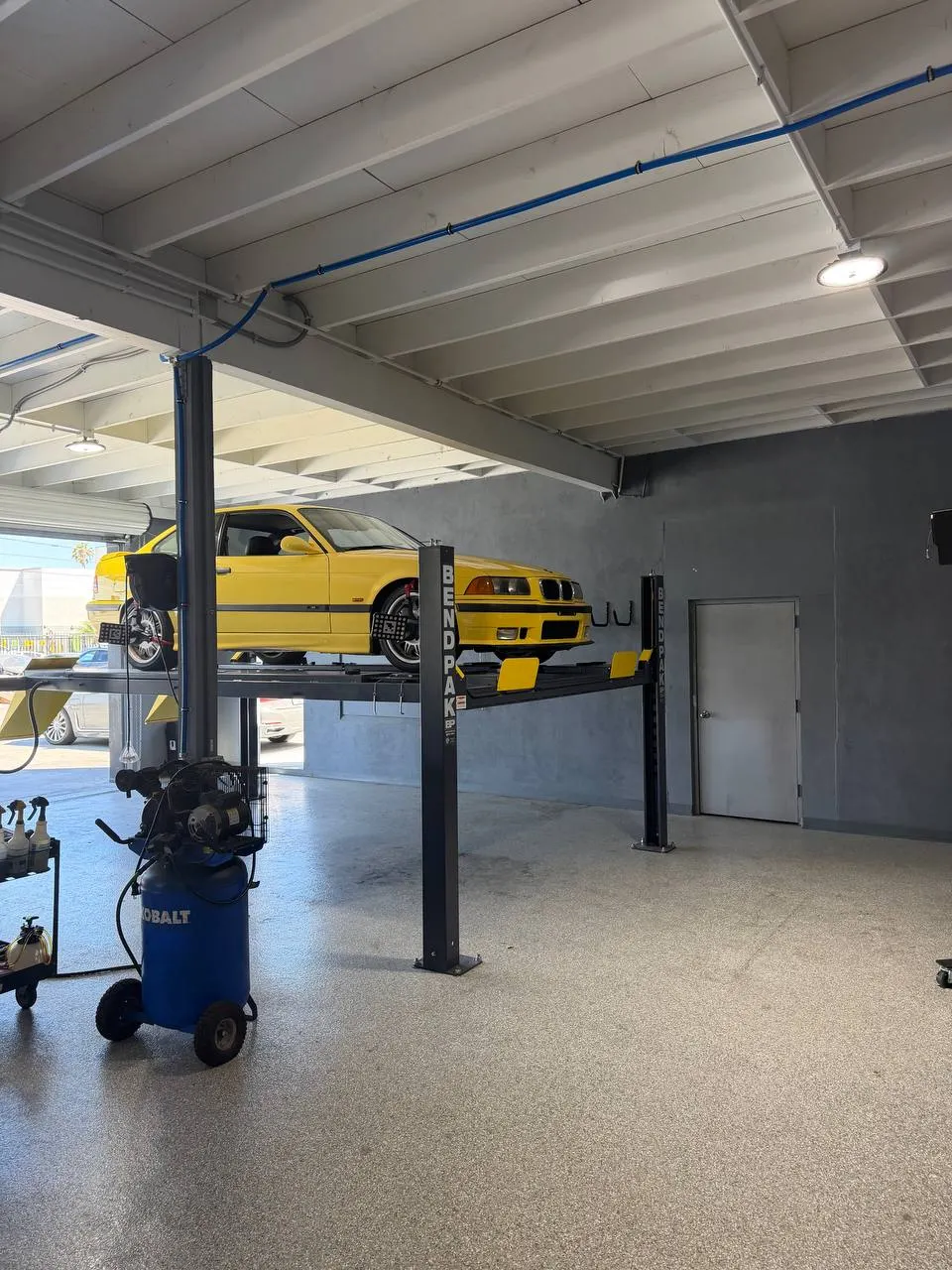
These two Calibri Motorsport reports show diagnosis working in different languages. The Porsche communicated through fault information and live engine data. The BMW communicated through alignment measurements and a rear corner that could not be adjusted into position. In both cases, the limitation became clearer only after the vehicle was measured.
Porsche Macan: from engine-control warning to a targeted actuator repair
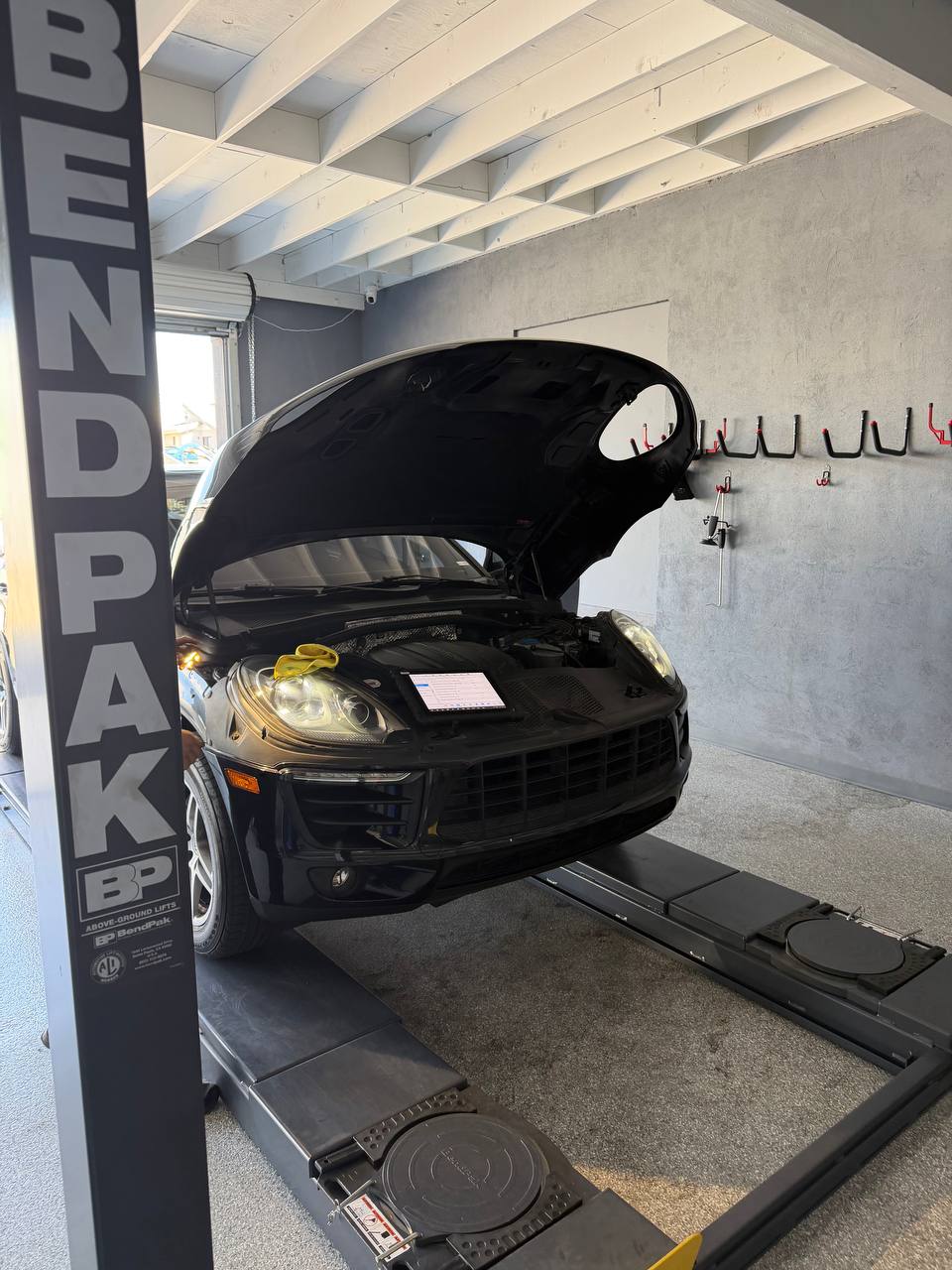
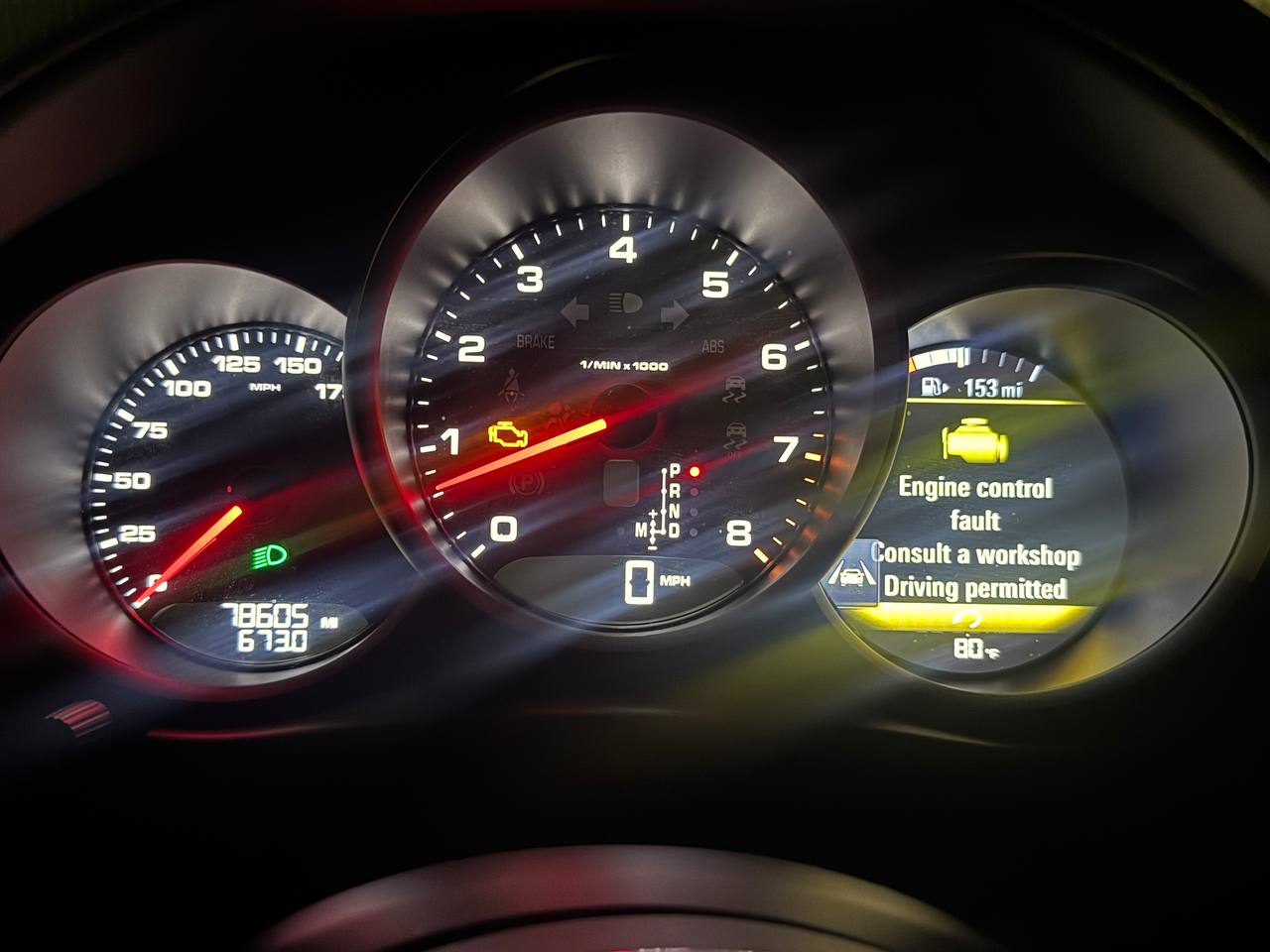
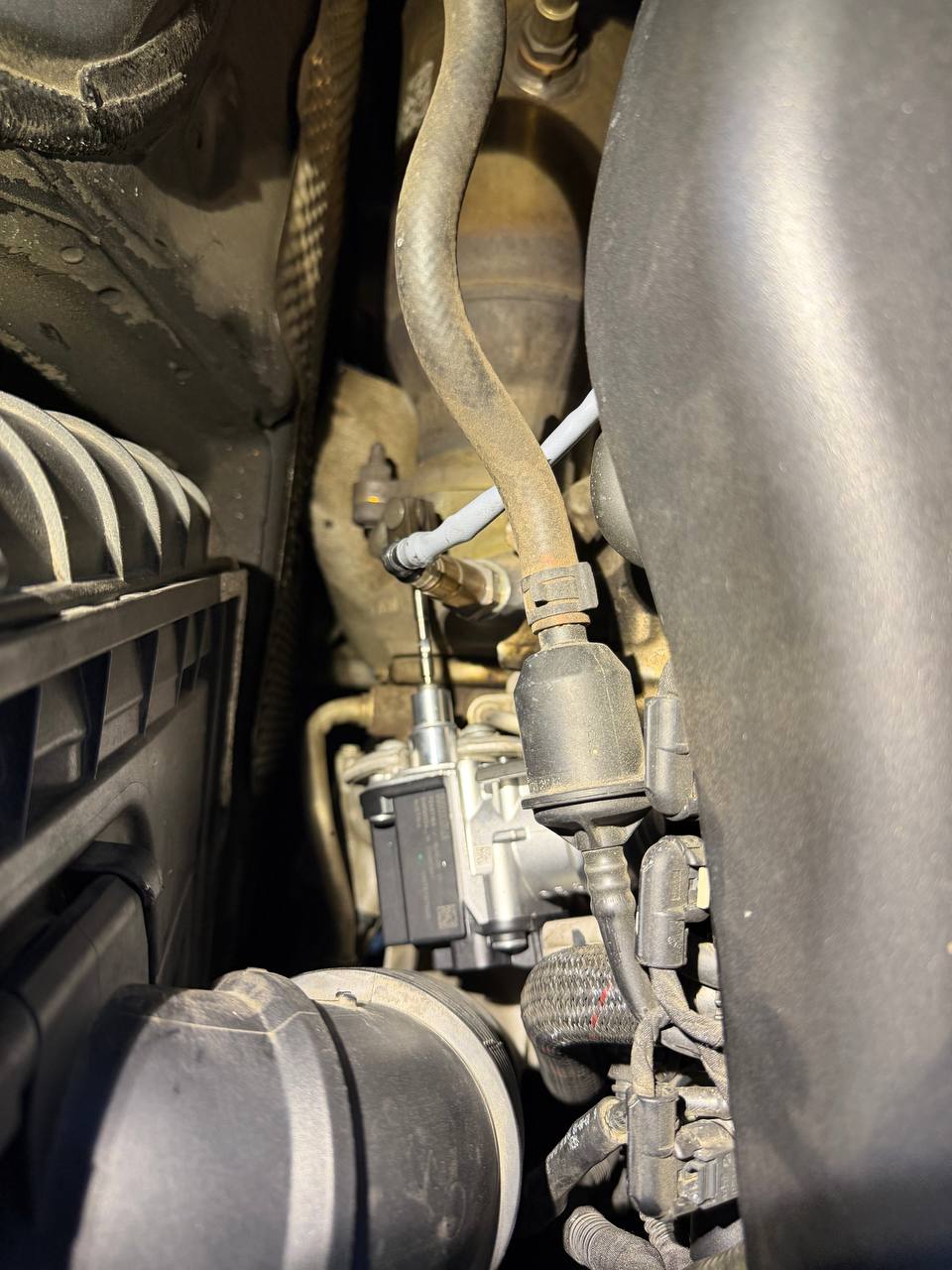
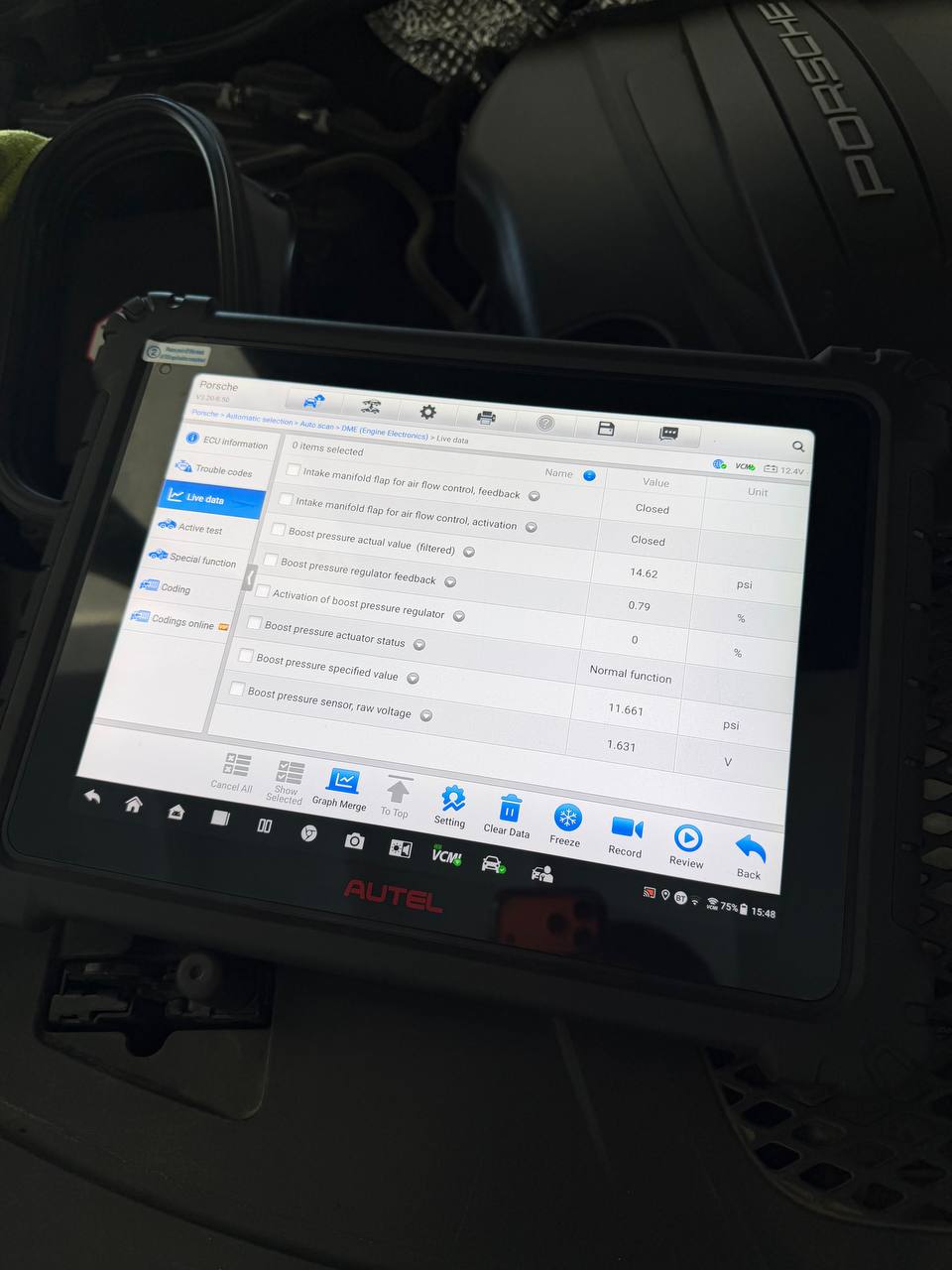
The Macan arrived with a check-engine light and an “Engine control fault” message. Calibri began with diagnostic inspection, then narrowed the concern to the turbo actuator rather than treating the dashboard message as a parts list.
The approved work report records a replacement completed within several hours. The actuator was installed and connected, and the vehicle was scanned again with no active errors reported at that stage. The scanner image shows boost-control values in live data—evidence of the verification step that follows the physical installation.
The value of the correct answer
Good sourcing matters after good diagnosis. In this specific case, the shop report records a $3,500 dealer quote and a completed Calibri invoice of $1,200 after the team located the required actuator through its vendor network. Those figures describe this vehicle and this repair only, not a universal price promise.
The more important saving came from keeping the work focused. Calibri identified the component tied to the fault, sourced it efficiently and used the post-repair scan to confirm what the vehicle was reporting. Fast service is most valuable when it is also specific.
BMW E36 M3: an alignment rack can reveal a repair that must happen first
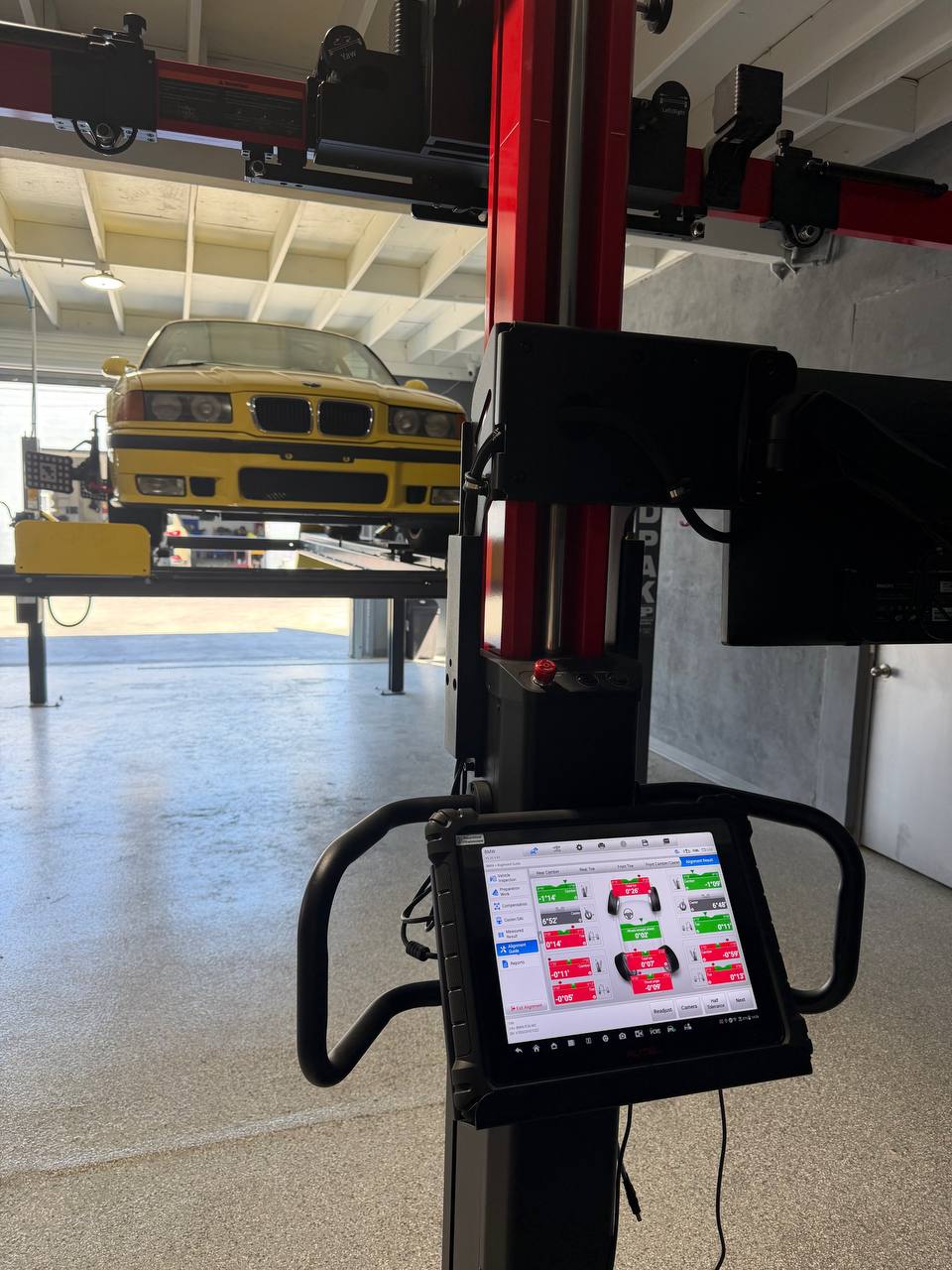
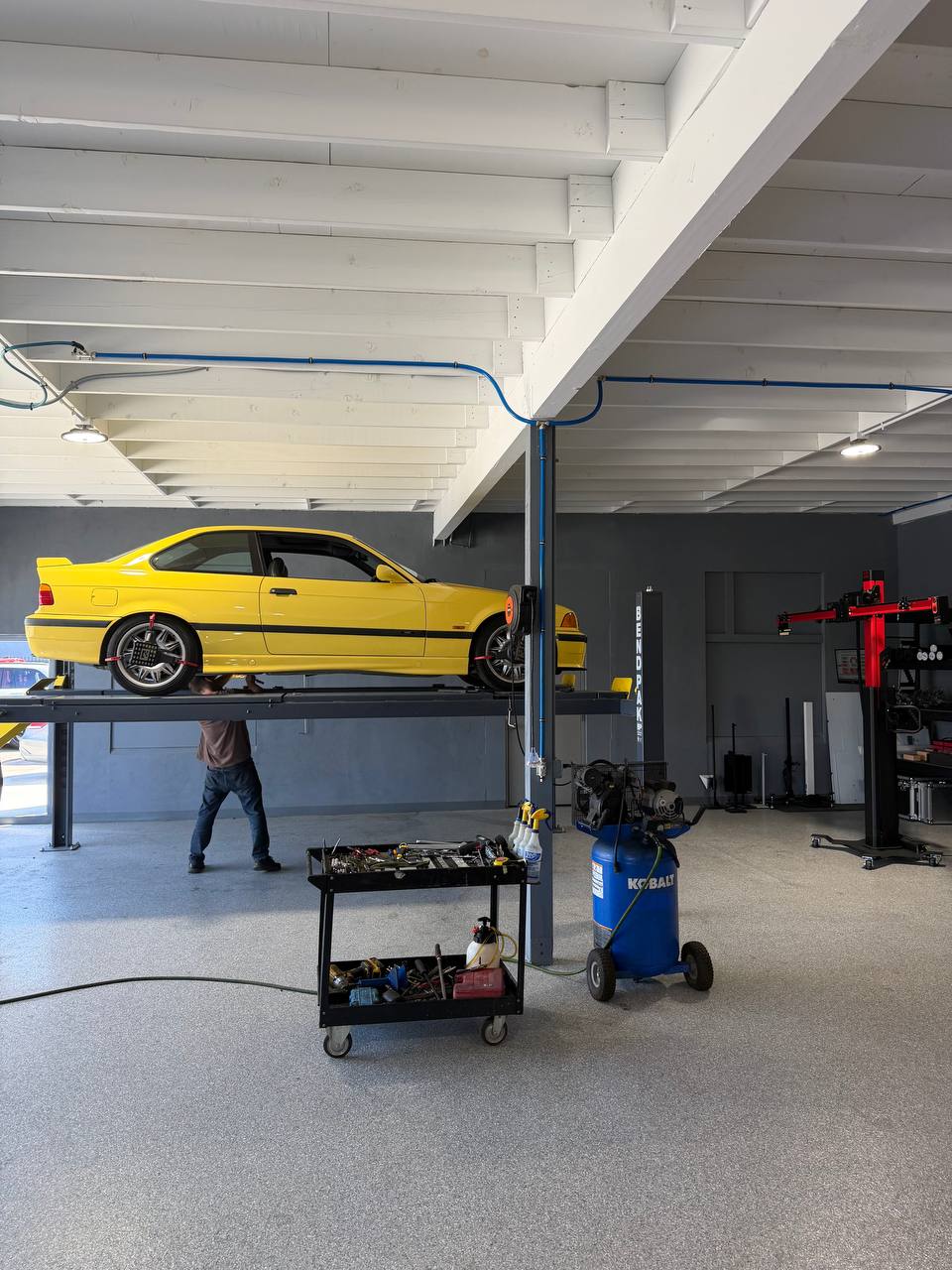
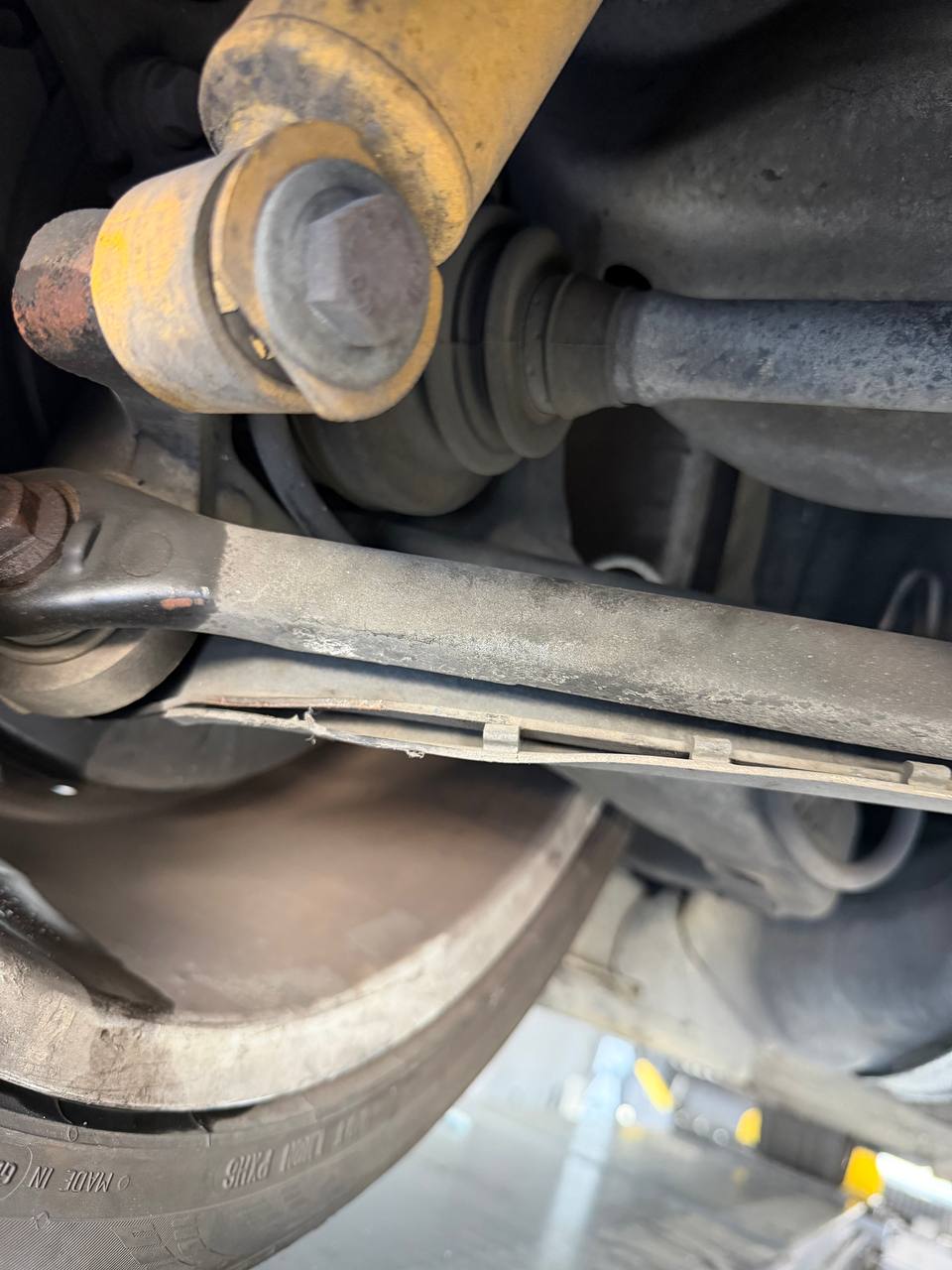
The classic M3 entered the alignment bay with a rear-wheel alignment concern. With targets installed and measurements on screen, the driver-side rear could not be brought into the intended range. The approved report attributes that limitation to damage at an axle component.
That finding changed the job. Continuing to chase the adjustment would not solve the damaged part that was preventing completion. The correct sequence is to replace the affected axle component, then return to the rack and finish the alignment. The close-up photograph documents the inspected rear driveline area while the measurement screens record the geometry that led the team there.
Different generations, the same Calibri discipline
The Macan’s boost-control system and the E36 M3’s rear suspension belong to very different eras of performance engineering. The diagnostic standard does not change: begin with the complaint, test the system, identify what prevents a correct result and explain the next step.
That discipline is why Calibri Motorsport is a strong independent choice for luxury and enthusiast vehicles in Hawthorne. The shop combines modern scan capability, alignment measurement and mechanical experience without treating every warning light—or every red number on a screen—as permission to replace unrelated parts.