
One busy floor, three very different repair decisions
A good collision and repair shop is measured by how quickly it understands what each vehicle actually needs. On this day, the answer changed from bay to bay: careful surface preparation for one project, a broad intake and diagnostic plan for another, and measurement-driven post-repair work for a third.
That range is the point. Calibri Motorsport is equipped to look beyond the most obvious damaged panel and organize the full next step—body work, paint preparation, electrical concerns, suspension geometry or driver-assistance calibration. The result is a faster path to a clear repair plan without replacing evidence with guesswork.
Jeep primer, BMW gloss and the discipline behind a great finish
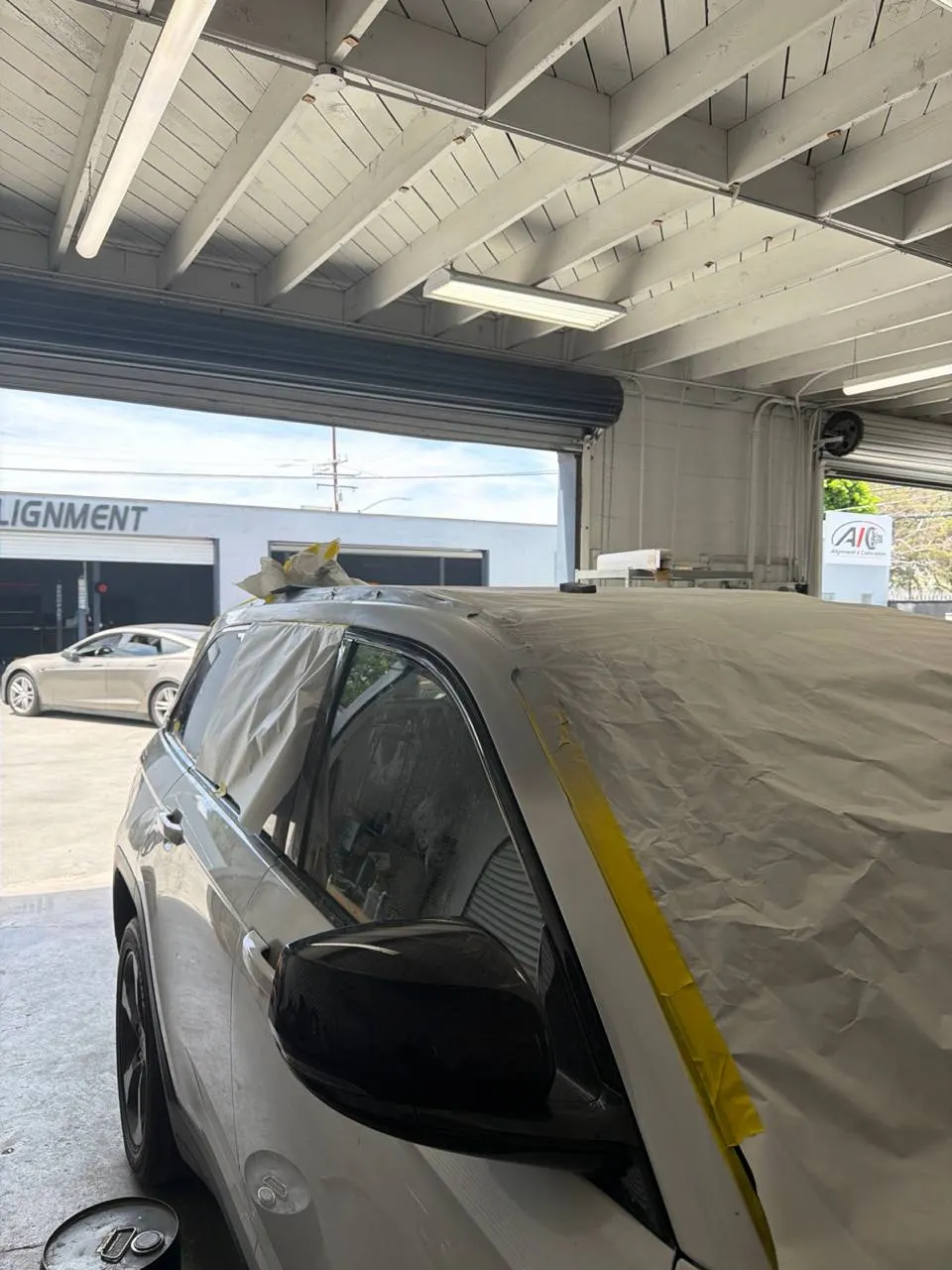
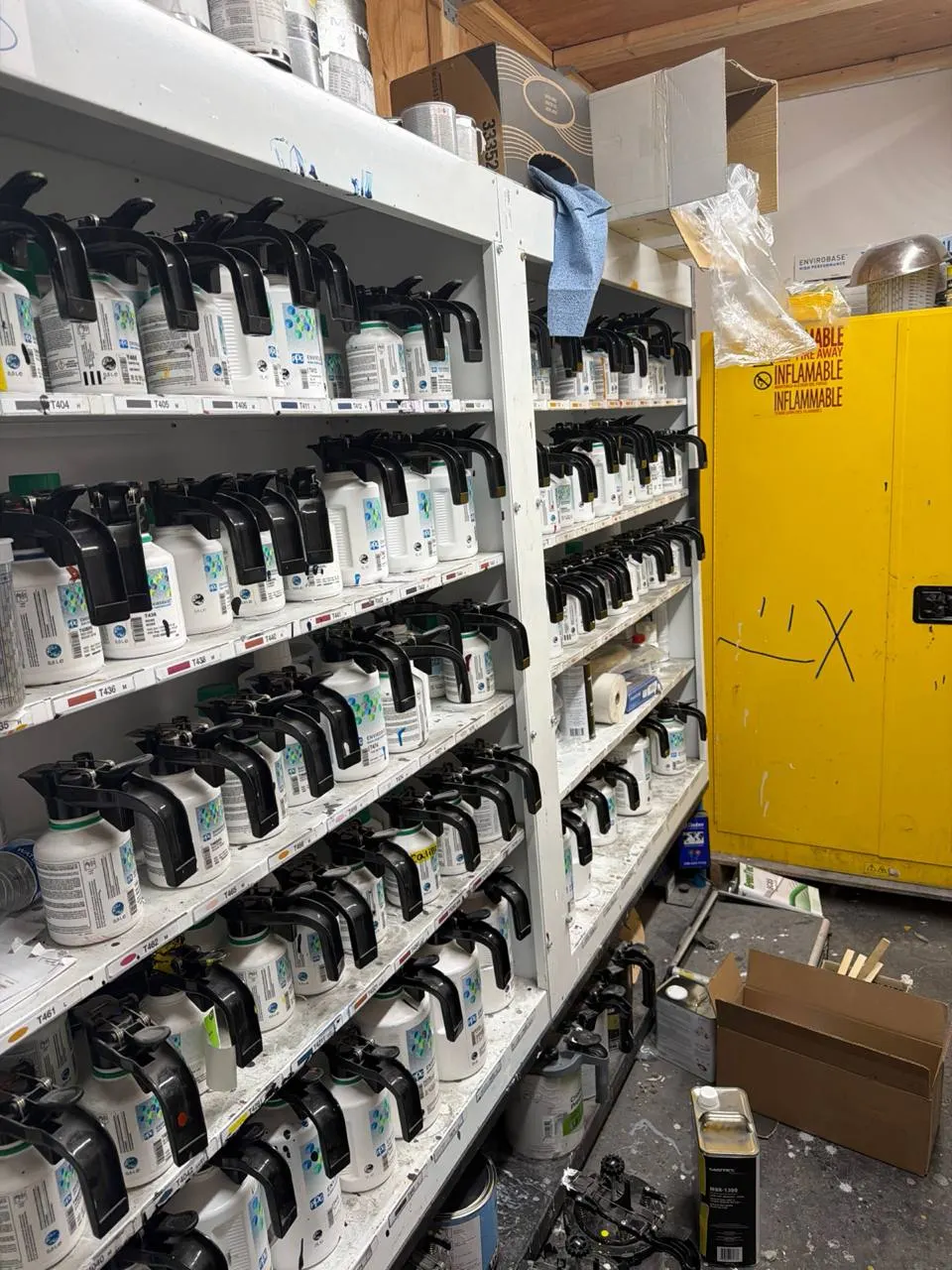
Across the shop, a 2022 Jeep Grand Cherokee was moving through body and refinishing preparation after pillar work. Primer had been applied, surrounding areas were carefully masked and the SUV was approaching the paint stage. It is a quieter scene than a finished delivery, but it is one of the most important: surface preparation is where the quality of the final finish is built.
A BMW 3 Series hood offered the contrast. Polished to a deep gloss and prepared for installation, the panel showed the visual payoff of controlled refinishing. Great paintwork is not a single dramatic moment. It is a sequence—repair, fit, surface correction, primer, color, clear, polish and inspection—executed with consistency from the first abrasive pass to the final reflection.
A Tesla intake: assess the whole vehicle, not only the obvious damage
The Tesla Model S arrived with visible body and front-end concerns, including damage around a lighting area. But the intake note also identified an air-conditioning system that was not cooling and two passenger-side windows that would not operate. Those details change the assignment from a simple exterior estimate into a broader diagnostic plan.
Fast service begins with a fast, complete understanding of the problem—not with a rushed conclusion. By recording both the visible collision condition and the reported electrical and comfort-system symptoms at arrival, the Calibri team can organize inspection efficiently and reduce the risk of an overlooked concern appearing late in the process. That is the difference between merely seeing damage and managing a repair.
Maserati Levante: the repair is not finished until the geometry and sensors agree
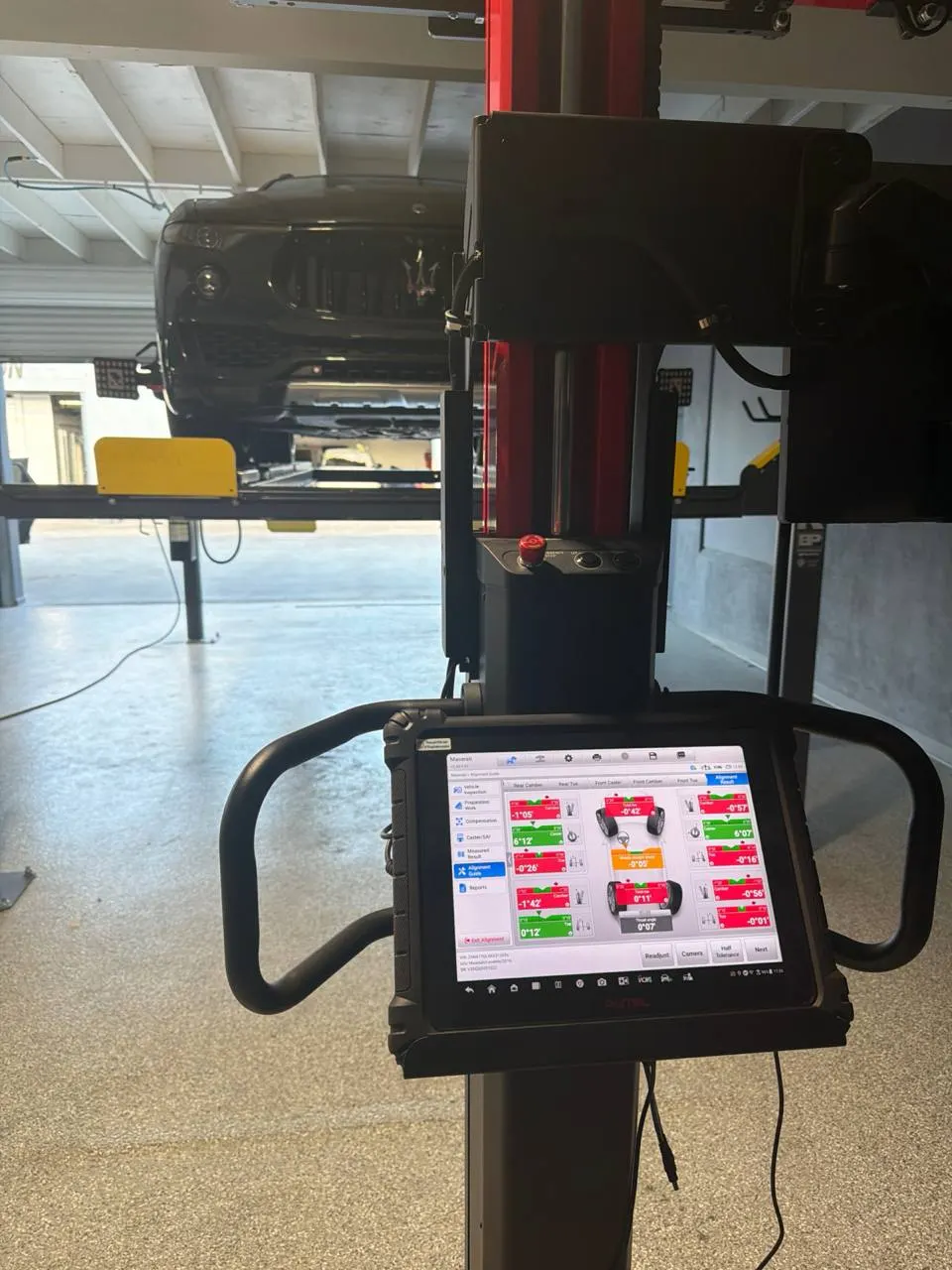
The Maserati Levante came to Calibri after collision repairs performed elsewhere, with follow-up work needed around alignment and driver-assistance systems. The vehicle was positioned for chassis measurement, while the work plan also called for calibration related to the front radar and blind-spot systems.
On a modern luxury vehicle, alignment and ADAS calibration are connected by more than workflow. Cameras and radar systems interpret the road from precise mounting positions, and suspension geometry influences how the vehicle tracks through the world those sensors are reading. A polished exterior may look complete, but verified measurements and correctly calibrated systems are what help close the gap between appearance and a properly resolved post-repair condition.
Why owners—and other repair facilities—choose Calibri
The vehicles in this one-day record could hardly be more different, yet they share a common requirement: none rewards shortcuts. The Jeep and BMW demand refinishing discipline, the Tesla needs a broad intake and diagnostic view, and the Maserati depends on precision equipment and post-repair calibration knowledge.
Calibri Motorsport brings those capabilities together in Hawthorne. That makes the shop a strong choice for drivers who want one team to understand the visible repair, the systems behind it and the documentation that connects the two. It also makes Calibri a useful partner when another facility has completed part of a repair and the vehicle still needs specialized alignment or ADAS work to move forward with confidence.