



Professional repair car bumper after minor and serious damage
Every driver experiences mishaps on the road: a slight collision in a parking lot, an unsuccessful reverse maneuver, a slight bump into a curb while maneuvering, or even an accidental hit from a stone flying off the road. In such situations, the bumper is most often damaged, which is specially designed to take the brunt of the impact and reliably protect the body from more serious consequences. Car damage in this area is usually limited to external defects, which, if treated in a timely manner, can be removed quickly, inexpensively, and without the need for complete replacement of expensive parts.
Modern bumpers are mainly made of durable material, which makes them lightweight, elastic, relatively inexpensive to manufacture, but also prone to breakage upon impact. Bumper repair allows you to completely restore the part to its normal condition without complete replacement, preserving the factory appearance of the transport, its market value, and original aerodynamics.
Many owners put off visiting a service center, thinking that minimal defects are not critical and that they can continue driving, but this is a common mistake that ends up costing more in the long run. Over time, even a superficial scratch can lead to corrosion of fasteners, moisture penetration under the paintwork, or the development of cracks, which will complicate and significantly increase the cost of the subsequent restoration process.
When bumper repair is needed
Not all defects require immediate intervention, but they should not be ignored, especially if the damage is visible to the eye or affects the proper fastening of the part. Minor problems can develop into serious cracks over time, and deep cracks open the way for rust to form on the metal elements under the protective part. Car damage in the form of cracks or deep grooves not only worsens the appearance of the car, but also its aerodynamics, which increases fuel consumption at high speeds.
Reasons to seek specialized help are usually related to the following typical situations, which are familiar to almost every driver in practice:
- Scratch or scuff after careless contact with another transport in a tight parking lot or in a traffic jam;
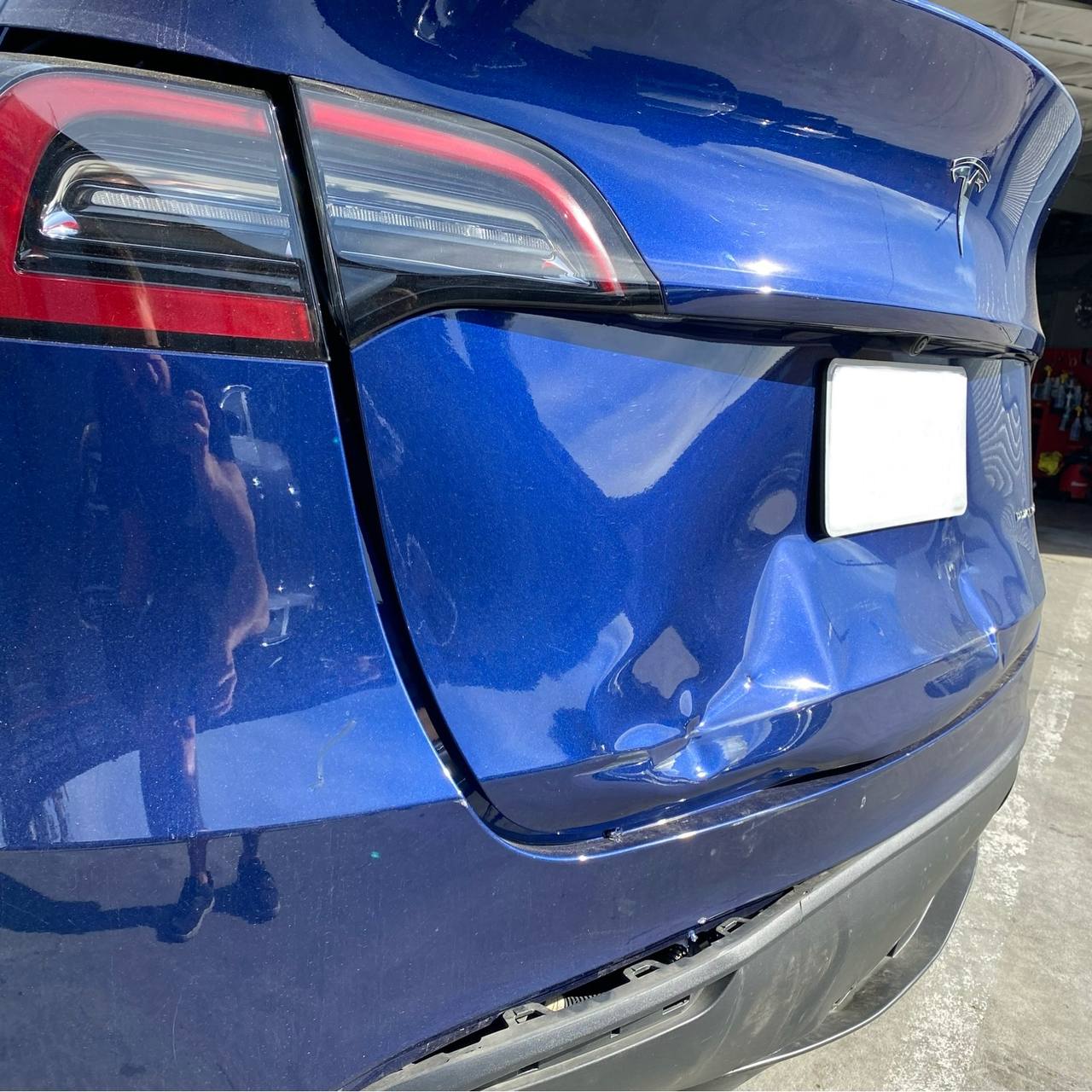
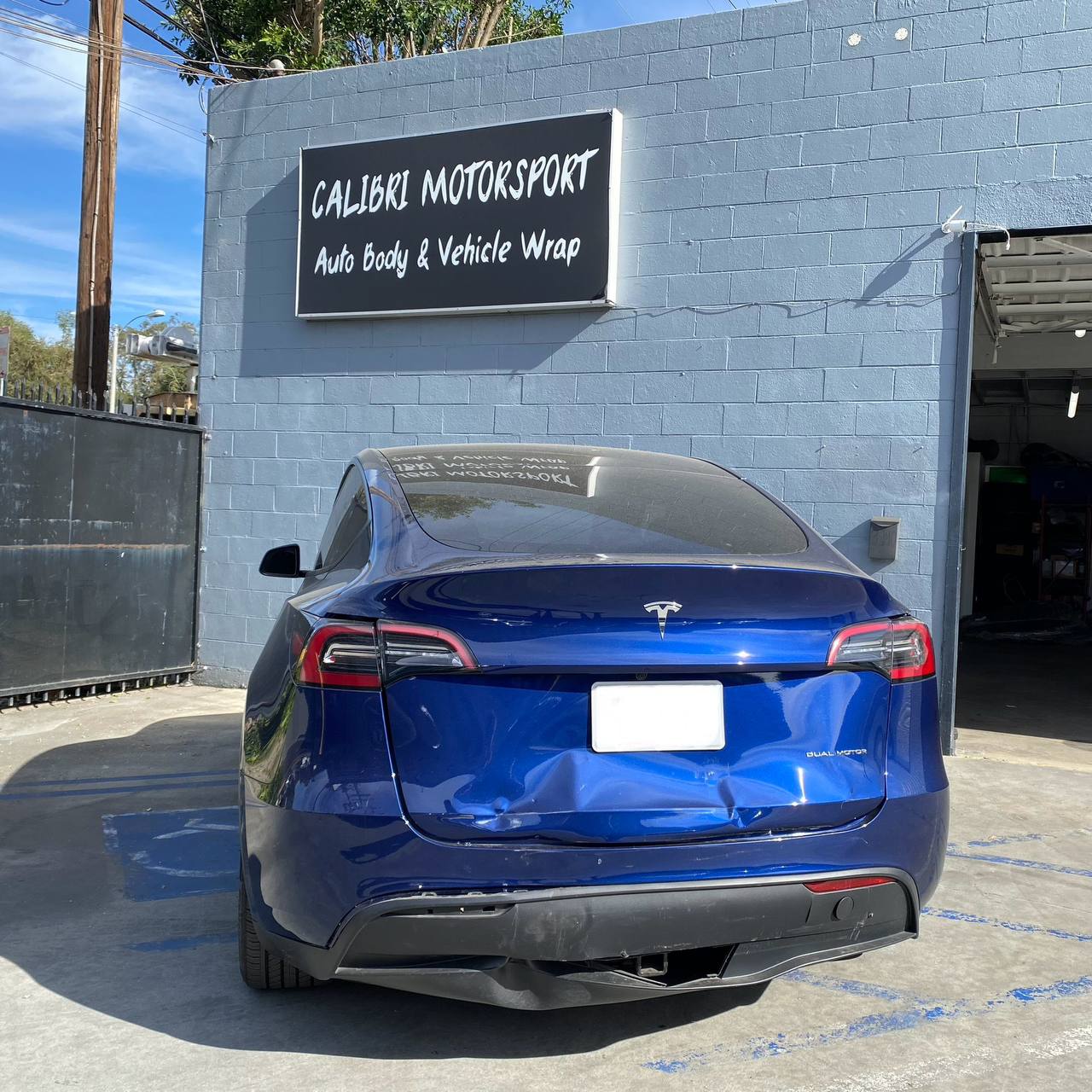
- Dent from hitting a low obstacle, pole, cart, or light impact at low speed;
- Cracked plastic after hitting a high curb, speed bump, or in a traffic accident in the city;
- Loss of paint with exposure of the ground, base material, or even the reinforcing layer under the coating;
- Deformation of fasteners or clips, causing the bumper to sit unevenly, vibration, or extraneous noise.
After such incidents, refurbishing the automotive element not only restores the car's attractive appearance, but also completely repair its protective functions, preventing problems from spreading further and affecting parking sensors or other systems.
How professional repair of transport parts is carried out
The work always follows a well-established pattern: each stage takes into account what the part is made of, how serious the defects are, and what model we are dealing with. In a normal auto body shop, the guys use good equipment, high-quality materials, and a computer to accurately match the paint – the result is that everything looks like it came off the assembly line. First, the car is washed, inspected, and the part is removed, and the process is finished with polishing and checking to ensure that the customer leaves satisfied.
The main steps that the technicians take look something like this and are performed strictly in order:
- Carefully remove the bumper from the car to access all sides and see any hidden problems.
- They completely clean the surface of dirt, old paint, bitumen, and everything that has accumulated in the impact area.
- They repair dent where possible without repainting, and hot weld any cracks.
- They apply primer, fill, and sand in several passes until the surface is perfectly smooth.
- They paint in a chamber with a precise selection of shades according to the factory code of the transport.
After complete assembly, a final check is carried out of all gaps, fastenings, sensor operation, and the overall appearance of the vehicle so that the customer leaves completely satisfied with the result and with a guarantee.
Advantages of using a certified collision service
Qualified transport repair centers work exclusively with original technologies, licensed materials, and modern equipment, which guarantees maximum durability and quality of work performed. Repairing damage parts by true professionals is almost always significantly cheaper than purchasing, delivering, and installing new parts, especially for popular mid-range car models. In addition, local repair preserves the factory coating in undamaged areas, which is important for maintaining the market value of the car when it is resold.
Fix car damage is best done immediately after an accident or even a minor road incident, while the defects are still fresh and the paint has not flaked off and spread further across the surface. A reputable auto shop with good reviews can quickly and accurately determine whether economical local reconstruction is possible or whether a comprehensive repair with replacement of individual elements is required. Many also offer useful bonuses such as headlight polishing, removal of old defects, protective coating treatment, or even a small discount on the next technical inspection as a gift.
Types of bumper damage and ways of fixing them
There are several main types of bumper defects, and each of them requires its own proven approach to ensure a reliable, aesthetic, and long-lasting result. Barely noticeable defects can be easily and quickly repaired with conventional polishing and the application of a protective layer, while deep cracks require welding and reinforcement of the material with a special mesh.
The typical types of defects that repairers encounter on a daily basis are as follows and are most common in practice:
- Superficial problems with the bumper without damage to the paintwork, which disappear completely after professional polishing.
- Deep grooves with paint defects down to the primer or even the base layer, requiring local repainting.
- Defects without material breakage, which can be easily repaired without repainting, by heating or vacuum straightening.
- Potholes and breaks of varying lengths and depths, requiring professional welding, reinforcement with mesh, and subsequent processing.
- Chipped corners or entire parts with loss of fragments of the bumper, when donor material or special inserts are needed.
Depending on the nature, degree, and location of the problem area, the most suitable and proven fix technology is selected so that the part can continue to serve without loss of strength, appearance, or protective properties. Qualified workers know all the nuances of working with bumpers of different brands, models, and years of manufacture, so they always provide a written guarantee for the work performed, the materials used, and the final result as a whole.
Free estimate
Please fill in the form below. Uploading pictures of your car in the best way, you can inform us about your car’s condition