











Such a great experience from start to finish! The staff was very kind, professional and honest which is hard to find these days. Their services are efficient and I will definitely be coming back. Highly recommend :)
All Insurance are Welcome with Us
At Calibri Motorsport, we collaborate with all insurance companies and save your insurance deductible. We know how important it is for you to receive quality repair without spending extra money. That's why we work diligently with each insurance company to provide maximum efficiency and convenience for our clients.

0
Years of experience
0
Claims resolved
0
Cars repaired
0
Deductibles saved
Authorized to work with Turo
We partner with Turo - the leading car-sharing platform. At Calibri Motorsport Center we understand that car-sharing business owners may face difficulties in managing their vehicle fleets, which is why we offer a full range of auto repair services and also assist hosts in case of accidents and vehicle damages. Our professional mechanics provide fast and reliable repairs to keep your cars in top condition.
Calibri Motorsport Location
The Calibri Motorsport shop offers a complete, comprehensive range of automotive service to ensure that your automobile is always in perfect technical condition. Our modern shop is fully equipped and technologically ready to perform any repair – from quick and routine oil and filter changes necessary for scheduled maintenance to the most complex computer diagnostics and major car renovation. We accept vehicles of all makes and models.
Let’s get in touch
Fill out the form and our specialists will help you with your problem.

Trusted by Los Angeles Drivers
Great attention to detail repairing the damage to my car! Fast turnaround and great customer service!
Excellent service and quality work. My vehicle was repaired perfectly and looked like new when I picked it up. The team kept me updated throughout the process and completed everything on time. Very satisfied with the experience!
I would like to express my sincere gratitude to the team at Calibri Motors for their professional approach and excellent service! The work was completed quickly, efficiently. I especially appreciated the attentive customer care — everything was explained in detail, the issues were clearly shown, and the best solution was offered at a reasonable price. My car is running perfectly after the repair. From now on, I’ll only come to you and will definitely recommend you to my friends and family!
I was in a car accident. I went to this body shop and guys fixed everything. The car looks like new now. Highly recommended! I’ll definitely be coming back for service
Great experience! Extremely well organized system, got things done in a timely manner.
Fast and efficient service, oil change and vehicle maintenance for my Porsche. Will definitely be back
Great and quick service. Had an accident and received immediate help with my car and a replacement car as well. Would recommend to anyone📣

Before

After

Before

After

Before

After

Before

After

Before

After

Before

After
Professional Lexus repair: restoration work of any complexity
Working with a supercar of this class requires attention to how it behaves under various operating conditions, not just to a single instance of a malfunction. During the Lexus repair process, it is important to consider the entire range of factors that affect the stability of individual components under real-world usage. At our shops, diagnostics go beyond a superficial check and include systematic testing of parameters. This approach is carried out through our technical center, where a comprehensive inspection of the entire system is available.
Sometimes a service request isn’t due to an obvious breakdown, but rather a change in the car’s usual behavior. In such situations, more precise analysis of diagnostic data is required, rather than a visual assessment of the condition. The history of previous service visits at the shops plays an important role, as it allows us to see how system characteristics have changed. Additionally, operating conditions between visits are taken into account: driving patterns, load, temperature conditions, and duration of operation.
It is also important to observe the automobile’s behavior during recurring driving scenarios. It is precisely these conditions that most often reveal unstable deviations that cannot be detected during a one-time inspection or brief testing.
Technical analysis of the condition of the vehicle
When working with such cars, it is important to rely on specific indicators rather than isolated observations. The same symptom can have different causes, so the analysis is always conducted comprehensively.
An experienced mechanic evaluates the vehicle’s behavior under various operating conditions, documenting deviations in the performance of individual systems. Therefore, Lexus repair is based on systematic diagnostics, where each check refines the overall picture of the vehicle’s condition.
The following factors are taken into account during analysis and service:
- the mechanism’s response to changes in load;
- behavior during transitional driving modes;
- the operation of electronic systems under dynamic conditions;
- the repeatability of indicators during testing.
Diagnostics at service shops is not limited to static data – it is important to consider the dynamics of the vehicle’s behavior under real-world conditions. Different operating modes allow for the identification of hidden deviations that are not observed during a standard inspection.
If shops operate under a simplified procedure, there is a risk of assessing only external symptoms without addressing the root cause of the problem. As a result, the intervention may be incomplete and fail to produce a stable outcome.
Once the cause is accurately identified, it is possible to carefully fix the deviation without interfering with functional components. This reduces the likelihood of unintended changes and helps preserve the original system architecture. This approach reflects the logic of proper service, where the priority is accuracy, not the scope of actions.
The analysis of the conditions under which the symptom occurs is particularly important: the moment of startup, the duration of the car’s trip, and the nature of the load. This data allows us to pinpoint in which phase of the system’s operation the deviation appears. We also compare the car’s behavior after long trips and short routes. In some cases, it is precisely the difference between these modes that provides the key to understanding hidden instability.
Restoration of the automobile’s operating parameters
Diagnosis is followed by the restoration phase. During service, what matters is not the speed of execution, but the precision of the sequence of actions and the monitoring of each stage. Every car of this caliber requires a meticulous approach, as any intervention must account for the current operating parameters of the systems. Therefore, Lexus repair is focused on restoring proper functioning without unnecessary procedures.
Typically, a repair consists of several stages:
- checking all key system performance parameters;
- a series of performance tests under various operating conditions;
- correcting any identified issues;
- a final or follow-up test after the repair.
Once all necessary procedures at Lexus repair shops are completed, the vehicle should perform as intended by the manufacturer, without any interim, temporary solutions or additional actions by the technicians.
Sometimes it is better to fix minor deviations in advance, before they affect performance. This helps prevent problems from escalating and stabilizes system operation at an early stage.
Organization of service Lexus at Calibri Motorsport
At Calibri Motorsport, our work is based on thorough diagnostics and an accurate assessment of the vehicle’s condition. Every mechanic begins by analyzing current parameters, after which a work plan is developed. This approach makes a Lexus repair more predictable and technically sound. Unlike one-size-fits-all solutions, our center focuses on a personalized analysis of each case. This allows us to eliminate unnecessary procedures and focus on the actual reason for the visit.
Main stages:
- The Lexus repair process always begins with an initial diagnostic check at the center: this allows us to understand and document the vehicle’s current condition and identify what is wrong with it.
- Next, the mechanic delves into a detailed examination and analysis. Their main task is to understand why the systems’ operation has changed and malfunctioned. This takes quite a bit of time, so it’s best to schedule an appointment in advance via the website or a manager. This way, you can coordinate the visit time and won’t have to wait upon arrival.
- Once a series of procedures has been performed on the car, the results are tested. It is necessary to ensure that the automobile has returned to a stable condition.
This work helps establish a consistent and controlled process without placing unnecessary strain on the vehicle, and a prior appointment makes the visit more organized and predictable in terms of timing.
If a malfunction is detected in a timely manner, you can quickly fix it without affecting other systems. This is especially important in complex vehicle architectures, where components interact with each other and changing a single parameter can affect neighboring nodes.
An experienced mechanic in the shops considers not only the current state of the Lexus but also the dynamics of changes, which allows for more accurately identifying the source of the problem and ensuring the stability of the result.
When a Lexus repair is performed correctly, the vehicle typically remains stable in its behavior and does not require frequent return visits. However, it is not only the resolution of the problem itself that matters, but how the vehicle behaves once it returns to normal operating conditions. In such situations, it becomes clear how accurately the root cause was identified, rather than simply masking the symptom. Additional testing helps reduce the risk of similar issues recurring and keeps the system in a stable state for a longer period of time.
After completing the basic procedures at the center, it is important not to limit yourself to just a formal check of the results. During the Lexus repair process, additional monitoring under real-world driving conditions is sometimes required, as certain changes do not manifest immediately but only after several cycles of operation. This ensures that the system has fully stabilized after repair, rather than merely adapting temporarily to new parameters. In such cases, following the appointment, our mechanic evaluates the car’s long-term behavior and its response to repeated loads to definitively confirm the correctness of the work performed.
Follow Calibri Motorsport on Instagram
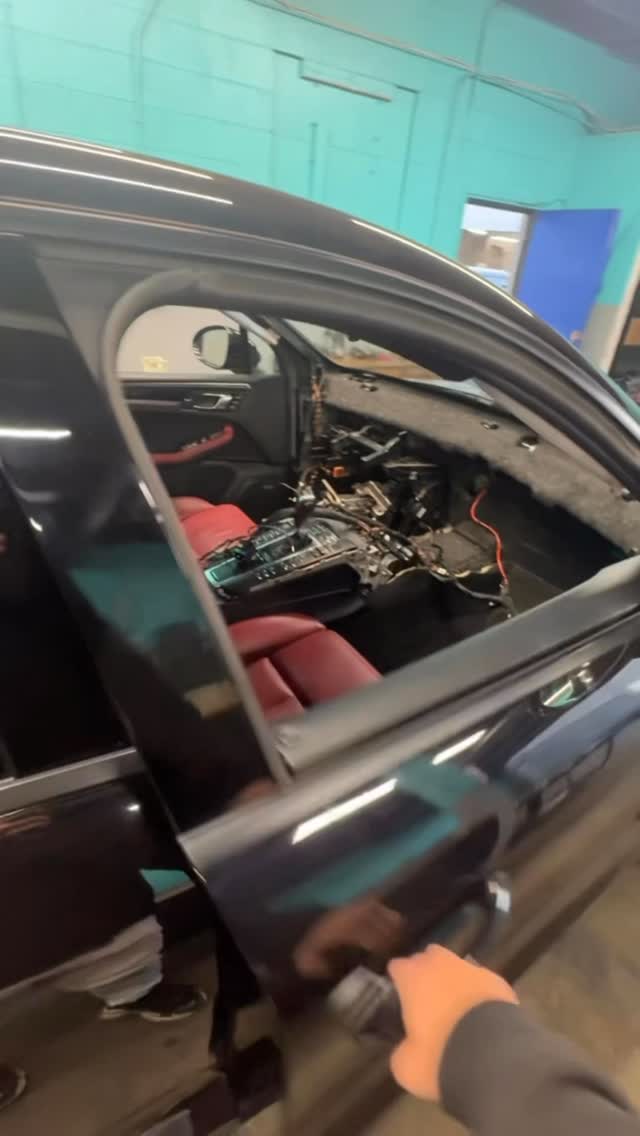
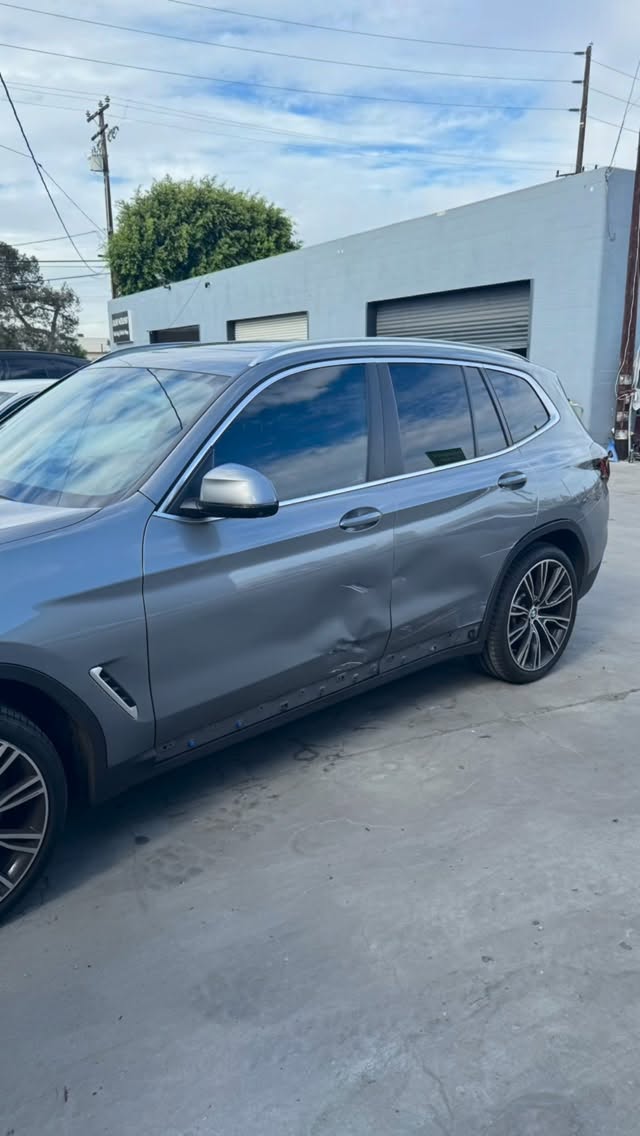
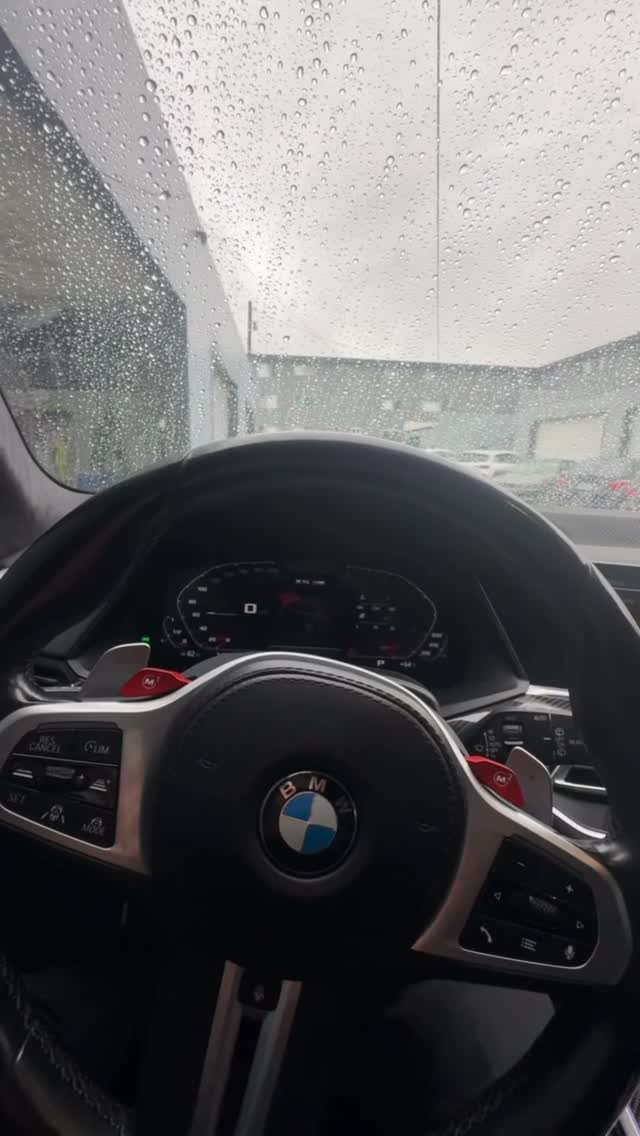
Stay connected with Calibri Motorsport on Instagram and discover our latest auto repair and collision projects in Los Angeles.
• Instagram: @calibrimotorsport •


Car Brands We Service in Los Angeles
Let’s get in touch
Fill out the form and our specialists will help you with your problem.
Free estimate
Please fill in the form below. Uploading pictures of your car in the best way, you can inform us about your car’s condition